


Digital Versus Conventional Full-Arch Implant Impressions
Lara Figini
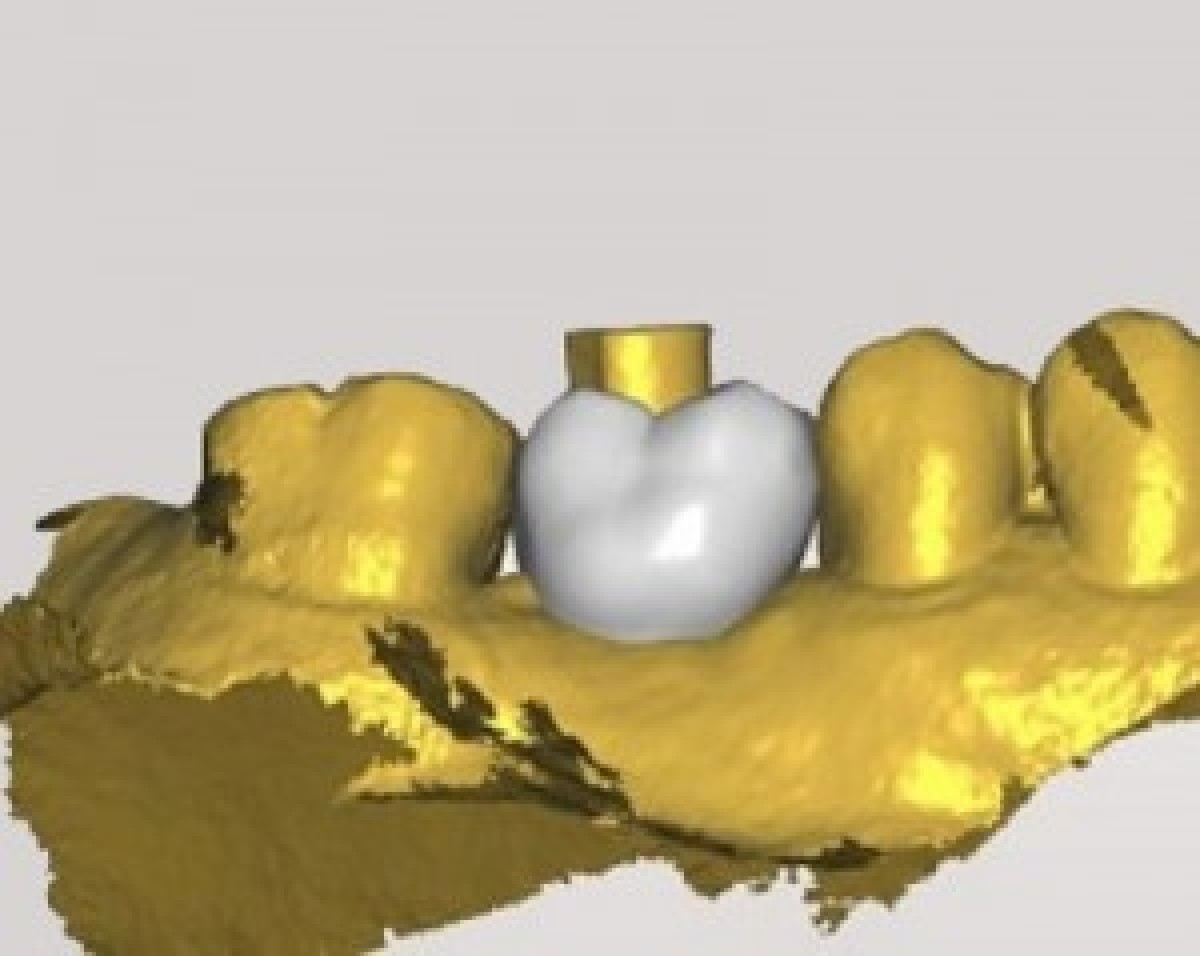
Digital dental technology has recently gained considerable popularity and has now been widely incorporated into the prosthetic and implant workflow. With the introduction of digital technology, impressions can be made by intraoral scans even in completely edentulous patients even if the procedure can be particularly complex mainly due to the absence of anatomical landmarks, such as the teeth, but its accuracy is widely discussed in the literature.
Materials and methods
In a prospective clinical study, published on Journal of Prosthodontics, April 2020, the authors compared the accuracy of digital and conventional impressions in the rehabilitation of fully edentulous patients with full-arch prostheses on implants.
Sixteen patients received maxillary implant supported fixed complete dentures. After the verification of the conventional final casts, the casts were scanned with a desktop (extraoral) scanner. Intraoral full-arch digital scans were also obtained with scan bodies and STL files.
Extraoral and intraoral scans were superimposed and analyzed with reverse engineering software.
The primary outcome measure was the assessment of accuracy between scans of the verified conventional casts and digital full-arch impressions.
The secondary outcome was the effect of the implant number on the 3D accuracy of impressions with Spearman’s rank correlation coefficient.
Results
The 3D deviations between virtual casts from intraoral full-arch digital scans and digitized final stone casts generated from conventional implant impressions were found to be 162 ± 77 μm. In the 4-implant group, 5-implant group, and 6-implant group the 3D deviations were found to be 139 ± 56 μm, 146 ± 90 μm, and 185 ± 81 μm, respectively. There was a positive correlation between increased implant number and 3D-deviations, but there was no statistically significant difference (p = 0.191).
Conclusions
From the data of this study, which must be confirmed in other similar studies, it can be concluded that the 3D precision of digital scans for prostheses on full-arch implants falls within a clinically acceptable threshold.
Clinical implications
The dental procedure that involves taking impressions through digital scans of a complete arch on implants with a fully digital workflow for the manufacture of complete fixed prostheses can be considered clinically feasible and valid.
For additional information: Digital Versus Conventional Full-Arch Implant Impressions: A Prospective Study on 16 Edentulous Maxillae.
 Read more
Continuous innovation across the DEXIS ecosystem helps clinicians work with greater clarity, confidence, and efficiency
News 23 October 2026
CrownPoint Partners announced the successful closing of a $9.2 million, five-property dental sale-leaseback portfolio located throughout Michigan.
News 23 October 2026
Dentsply Sirona, Midwest Dental Expand Technology Relationship
Beginning November 1, Dentsply Sirona will expand its long-standing relationship with Midwest Dental Equipment & Supply beyond consumables to include its complete technology portfo
Editorials 23 October 2026
Honoring Excellence: Graduation Awards for CU Anschutz Dental Students and Faculty

As the University of Colorado Anschutz School of Dental Medicine celebrates the graduating DDS Class of 2025, we are proud to recognize the students and faculty members whose excep
Implantology 23 October 2026
This peer-reviewed implantology article summarizes clinical evidence from Clinical oral implants research (2026). It focuses on findings that may help dental professionals evaluate treatment...



Copyright © 2026 - All Rights Reserved
ISSN 2767-1178