


Preparation of the implant site: rotary system vs ultrasound system
Lara Figini
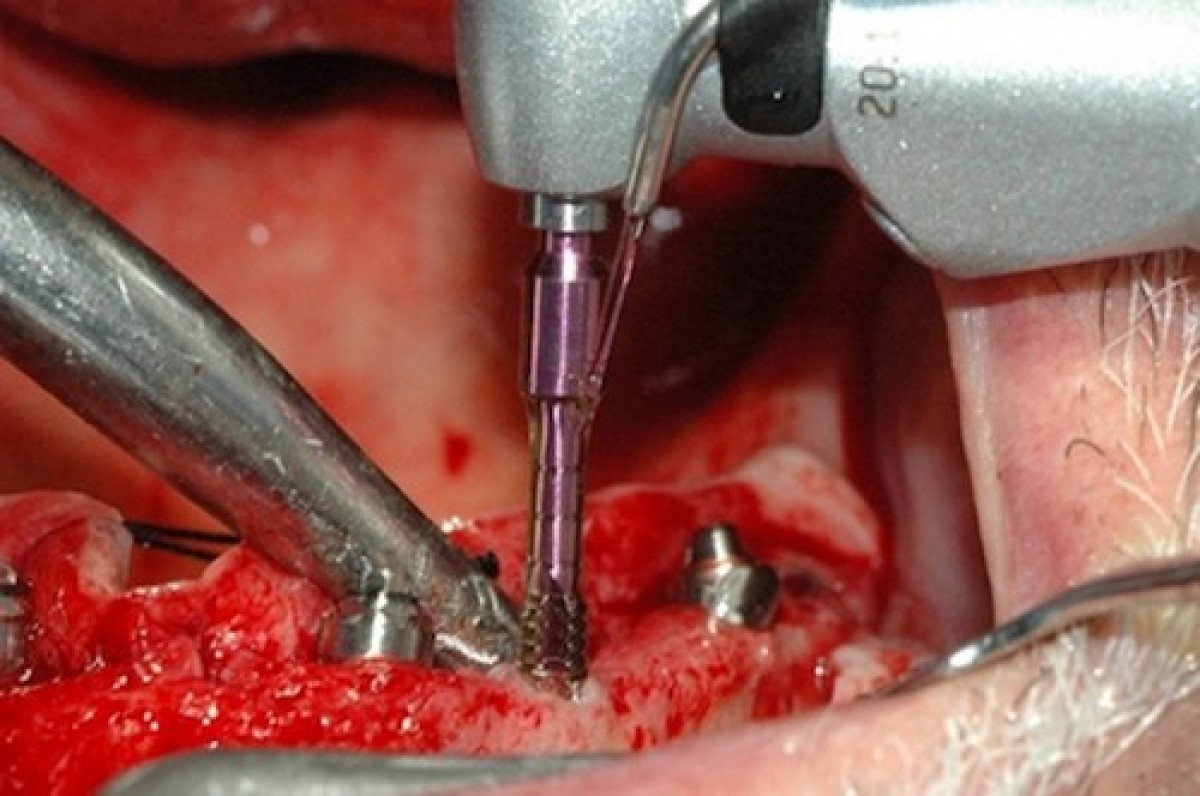
The implant site preparation process is commonly performed using a handpiece and rotating burs of various shapes and sizes that pierce the bone in order to create the contour and shape suitable for implant accommodation.
For this purpose, an ultrasound system has also been introduced which is mainly used in procedures that require a high level of precision and where it is necessary to protect adjacent anatomical structures to avoid a potential complication.
Materials and methods
In an in vitro study, published in Oral Surgery of May 2020, the authors compared the preparation of the implant site obtained by means of a system of rotating burs in comparison with that obtained by means of an ultrasound system by evaluating the variables temperature, time and primary stability. Sixteen osteotomies were performed with different sequences of drills (initial, Titamax 2.0, 2/3 and 3.0) for the rotary group (RG) and with different ultrasonic tips (IM1S, IM2P, IM2 / 3, IM3P) for the ultrasound group (UG) on bovine cortical-cancellous bone samples. Micro-CT images were acquired to evaluate the bone microarchitecture and bone mineral density of each sample. For the RG group, the osteotomies were performed with a contra-angle handpiece for implants at 800 rpm with a maximum torque of 50 N / cm. For the UG group, osteotomies were performed using a Piezosurgery3 system with respective tips. The temperatures generated in the bone in the vicinity and the time required to prepare the implant housings were measured. Four 3.75 x 11 Titamax implants were placed for each group to measure the final torque.
Results
For the RG group the following average values were found: 22.87 s, 24.2 ° C surface temperature, 27.6 ° C drilling temperature and 32.30 N / cm of torque. The values for the UG group were found to be 72.9 s, surface temperature 26.6 ° C, drilling temperature 32.1 ° C and torque of 22.60 N / cm.
Conclusions
From the data of this study, which must be confirmed in other similar works, it can be concluded that the rotary and ultrasonic systems are both effective methods for the preparation of the implant site, giving satisfactory results. For cortical-cancellous sites, preparation with handpieces and rotary systems is related to a lower rise in temperatures and a shorter time required for osteotomy.
Clinical implications
Knowing the differences between ultrasonic and rotary systems can help surgeons preserve the implant site and is essential to guide their maneuvers during implant placement surgery.
For additional information: In vitro comparison of dental implant site preparation with ultrasonic system and conventional rotatory system.
 Read more

Continuous innovation across the DEXIS ecosystem helps clinicians work with greater clarity, confidence, and efficiency
News 23 October 2026

CrownPoint Partners announced the successful closing of a $9.2 million, five-property dental sale-leaseback portfolio located throughout Michigan.
News 23 October 2026
Dentsply Sirona, Midwest Dental Expand Technology Relationship

Beginning November 1, Dentsply Sirona will expand its long-standing relationship with Midwest Dental Equipment & Supply beyond consumables to include its complete technology portfo
Editorials 23 October 2026
Honoring Excellence: Graduation Awards for CU Anschutz Dental Students and Faculty

As the University of Colorado Anschutz School of Dental Medicine celebrates the graduating DDS Class of 2025, we are proud to recognize the students and faculty members whose excep
Implantology 23 October 2026
This peer-reviewed implantology article summarizes clinical evidence from Clinical oral implants research (2026). It focuses on findings that may help dental professionals evaluate treatment...



Copyright © 2026 - All Rights Reserved
ISSN 2767-1178