


Four solutions to correct divergent implants
By Zirkonzahn
Creating restorations on divergent implants, especially in the case of circular ones, is one of the biggest challenges for a dental team. Listed below are some of the new Zirkonzahn implant components and innovative working techniques which make it possible to produce stable and aesthetic restorations for implants oriented towards the palate or the vestibular area of the teeth, even in cases of total edentulism.
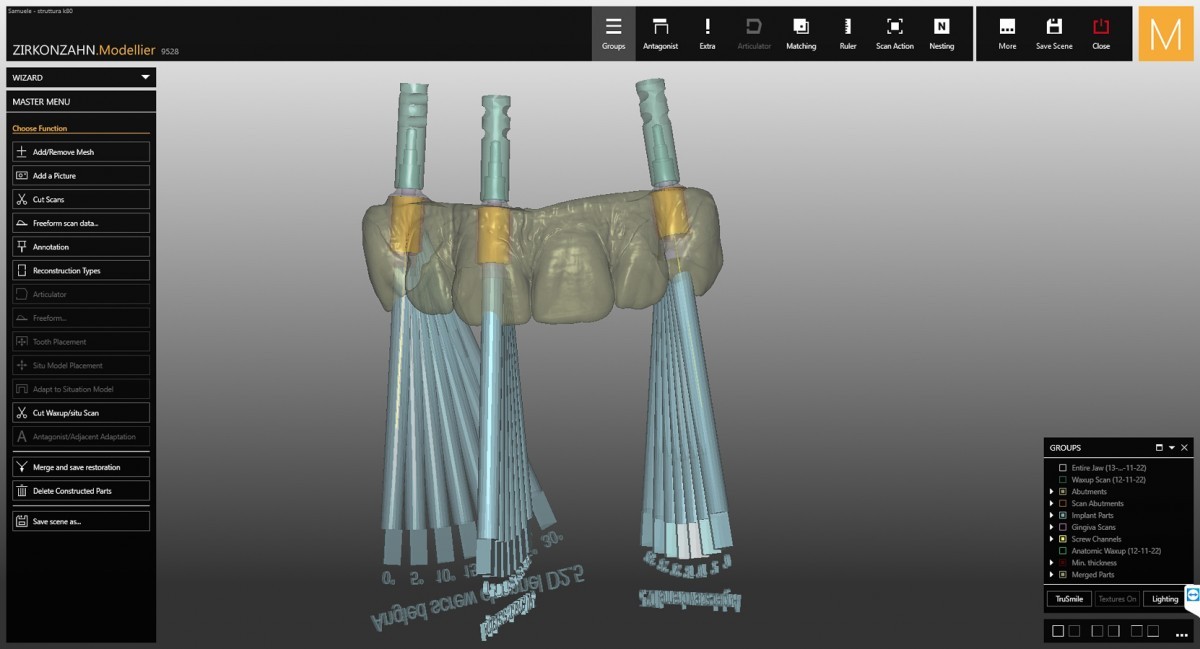
K80 Angled Screw Channel (ASC) Titanium Bases
The new K80 Angled Screw Channel (ASC) titanium bases combine two advantages in one product. On the one hand, they can be individually shortened to fit the patient's teeth; on the other hand, the angled screw channel allows to compensate for non-optimal implant positions, shifting the angulation from 0° to 30°. (fig 1)
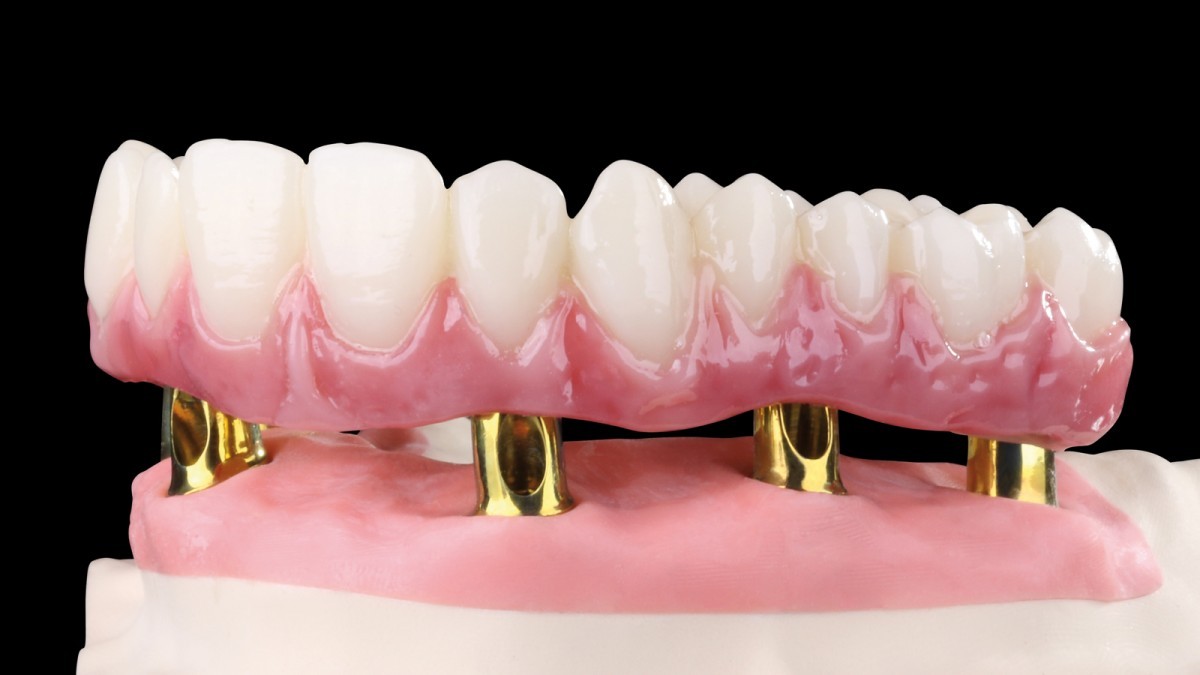
Individual Raw-Abutments® in titanium
Raw-Abutments® (fig 2) are high-quality medical titanium blanks designed to produce individual abutments.
The industrially prefabricated implant connection guarantees maximum precision of adaptation, while the possibility of freely modeling the abutment allows to compensate for the divergences of the implants, correcting their orientation.
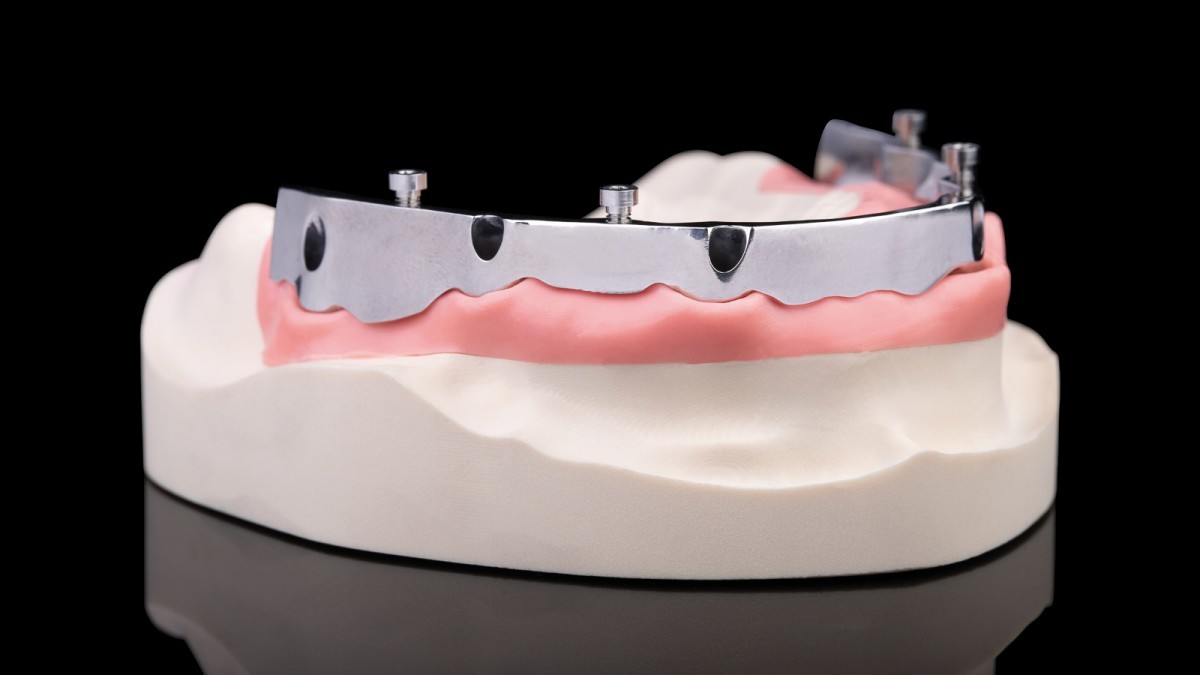
Double Screw Metal: stable and aesthetic circulars on buccally oriented implants.
The Double Screw Metal technique consists in integrating additional screw channels into the design of the bar: in this way, the titanium bar is screwed directly to the implants and the superstructure is screwed to the bar. With this innovative technique it is possible to avoid unsightly buccal canals and to create restorations on highly stable implants even in particularly complex cases without compromising the final aesthetics.
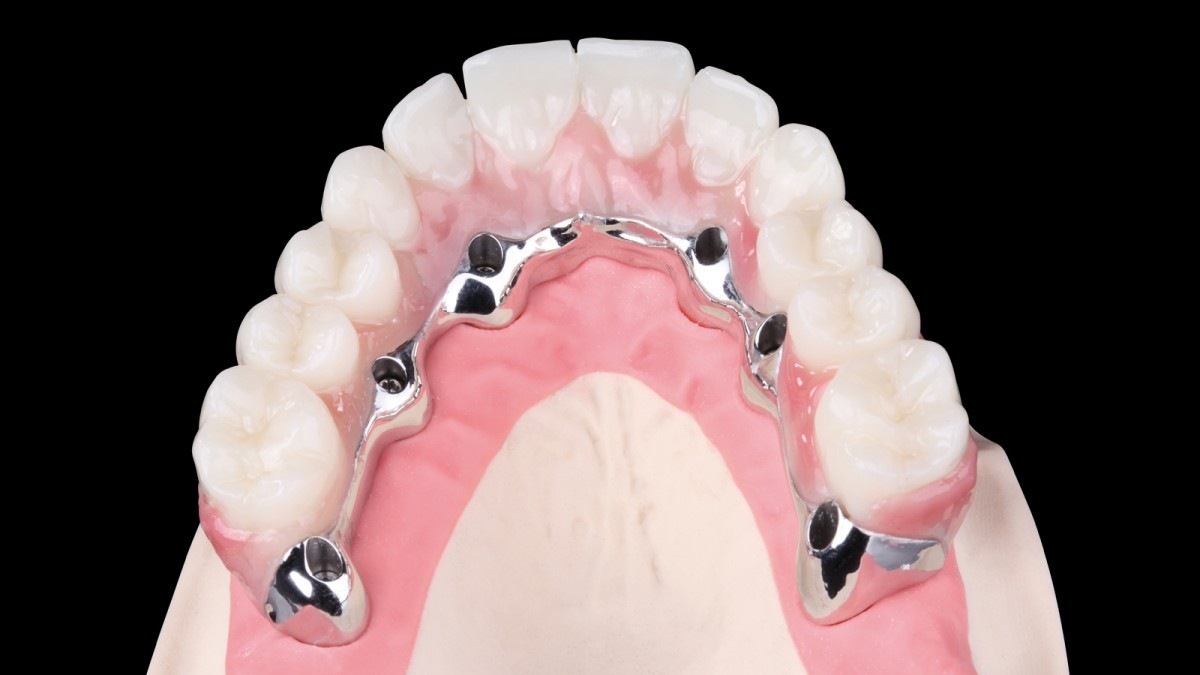
Bartplatte: circular on implants oriented towards the palate
Starting from the wax-up of the restoration, the bar can be geometrically adapted to the anatomy of the superstructure using the free modeling tools of the Zirkonzahn CAD software. In this way, it is possible to correct the orientation of the implants towards the palate and to create stable and aesthetic circulars even in the case of edentulous arches.
 Related articles
Endodontics 02 February 2026
Implantology 20 January 2026
Smoking as a risk factor for dental implants and implant-related surgery

Cigarette smoking is known to adversely affect wound healing, and thus may jeopardize the success of dental implantation and implant-related oral surgery.
Products 27 November 2025
Neocis Unveils Next-Generation AI-Powered Robotic System for Dental Implants

Neocis, the pioneer behind the first and only U.S. FDA-cleared robotic system for dental implant surgery, today announced the launch and FDA approval of its next-generation robotic platform: Yomi...
News 23 October 2025
The global dental implants market is projected to grow from USD 5.45 billion in 2024 to USD 15.41 billion by 2035, expanding at a CAGR of 9.95% from.
Read more
Solutions is an Edra professional dentistry reference focused on clinical practice, education and treatment planning.
Products 16 October 2026
Karen Davis on Philips Sonicare DiamondClean 9900 Prestige & Smarter Brushing

News 16 October 2026
Align Technology to Report Q3 2026 Financial Results October 28
(Nasdaq: ALGN), a leading global medical device company that designs, manufactures, and sells the Invisalign® System of clear aligners, iTero™ intraoral scanners, and exocad™ CAD/C
News 16 October 2026

Fewer people on intake, faster turnaround, and no lost cases: Relu’s new automation captures and centralizes every scan and Rx from every source within a minute of arrival
Editorials 16 October 2026

Achievement and service take center stage as the University of Colorado Anschutz School of Dental Medicine honors the Doctor of Dental Surgery (DDS) Class of 2026.



Copyright © 2026 - All Rights Reserved
ISSN 2767-1178