


Is there a correlation between the scanners accuracy and pulp chamber depth of endocrowns?
Simona Chirico
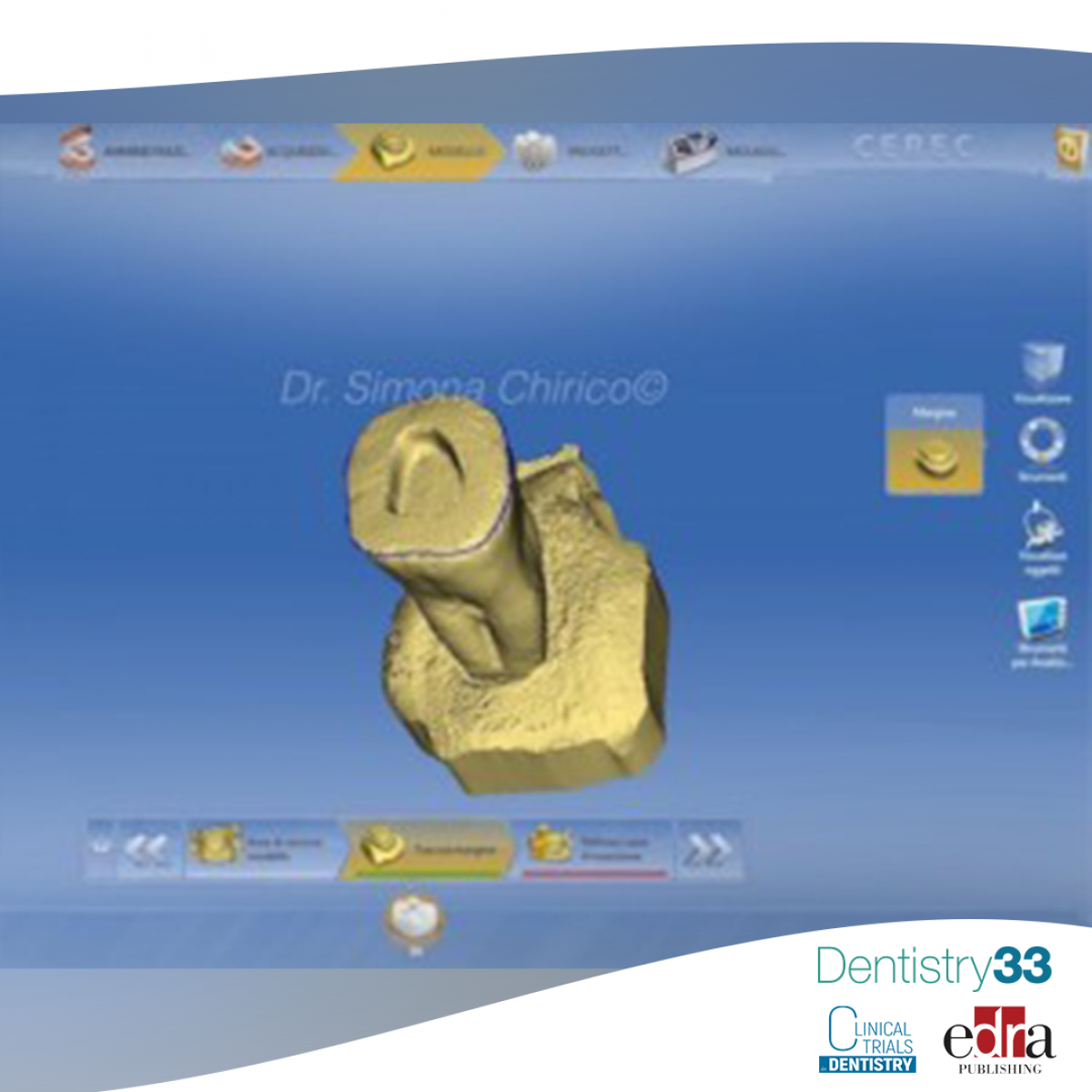
The restoration of endodontically treated teeth is always a current challenge in the dental field. A valid type of restoration is the use of endocrown, a monoblock restoration that exploits the retention inside the pulp chamber to give resistance to the dental element. This type of restoration is closely related to CAD / CAM technology. Today there are many scanners on the market and they show excellent performance not only in taking an impression of a single tooth, but also in full arches. The performance of intraoral scanners depends on the accuracy and precision they have in recording the impressions. The success of the endocrown, however, depends not only on the marginal adaptation between the restoration and the tooth, and the pulp chamber depth, but also on the accuracy of the scanner.
What is the correlation between these two aspects? The answer is given in the article by Gurpinar et al, published in The Journal of Prosthetic dentistry
Material and methods.
Six different IOSs were compared: TRIOS 3, CEREC Omnicam, CEREC Primescan, Planmeca Emerald, iTero Element2, and Virtuo Vivo. Endocrown preparations were digitally designed with a computer-aided design and computer-aided manufacturing (CAD-CAM) software program (Rhicoceros), and the PCEDs of preparations were 2, 3.5, and 5 mm. Designed preparations were milled from a polymethylmethacrylate block (Telio CAD) with a milling unit. Reference scans were obtained from an industrial scanner (ATOS), and 5 test scans of each cavity were made with 6 IOSs. All scans were converted into standard tessellation language (STL) files. The data sets obtained from the IOSs were superimposed on the reference scan to evaluate trueness and on each other within groups to determine precision by using a 3D analysis software program (Geomagic Control X). Obtained data were analyzed with 1-way ANOVA and Tukey HSD tests (a=.05).
Results
CEREC Primescan was found to have the best trueness and precision among the evaluated IOSs (P<.05), while Planmeca Emerald was found to have the lowest trueness (P<.05). For all tested PCEDs, statistically significant differences were found among IOSs. A PCED with a 2-mm depth (18.57 ±4.80 mm) showed significantly better scanning trueness than that with a 5-mm depth (23.81 ±6.53), while no significant differences were found between 2 and 3.5 mm (P>.05).
Conclusions
Deep pulpal chamber extensions of endocrown restorations could negatively affect scanning accuracy, and scanning accuracy varies depending on the selected IOS. CEREC Primescan appears to be the best IOS choice for scanning endocrowns with deep pulpal chamber extensions.
For additional information: Effect of pulp chamber depth on the accuracy of endocrown scans made with different intraoral scanners versus an industrial scanner: An in vitro study
 Related articles
Endodontics 28 February 2023

Chirico works in private practice in Milan and Desio, Italy. Her principal areas of expertise are digital dentistry, endodontics and restorative dentistry. ...
Prosthodontics 12 February 2023

There are various types of materials used to perform this type of restoration. But which of these has a better mechanical behavior?
Prosthodontics 09 September 2022
Evaluation of Endocrown preparation and fracture resistance in endodontically treated teeth
Lateral-posterior teeth, after endodontic therapy, require adequate restorations to re-establish masticatory function and minimize the risk of fracture, as well as ensure a perfect seal to prevent...
Digital Dentistry 29 July 2022
Endocrown VS Crown+Post: which is the best restoration for endodontically treated teeth?

The restoration of endodontically treated teeth is still a discussed topic in dentistry. Today, the most common restoration for endodontically treated teeth...
Prosthodontics 11 May 2022
How much does the thickness of lithium disilicate affect the fracture resistance of the endocrown?
The restoration of severely damaged endodontically treated teeth is still a discussed topic in dentistry. Today, the most common restoration for endodontically treated teeth involves post and crown,...
Read more
Products 13 October 2026

New Resources Help Dental Exhibitors Evaluate Their Investment and Explore the Personify ShowFlow™ Trade Show Success System
News 13 October 2026

New patient apps extend The Aspen Group’s mission to remove barriers to care, giving patients greater visibility, convenience, and control from booking through treatment
Editorials 13 October 2026
The forerunner of what’s now Texas A&M College of Dentistry opened 120 years ago in Dallas with the mission of educating dentists to provide quality care to patients in North Texas
Oral pathology 13 October 2026
This peer-reviewed oral pathology article summarizes clinical evidence from Oral oncology (2026). It focuses on findings that may help dental professionals evaluate treatment decisions, patient...



Copyright © 2026 - All Rights Reserved
ISSN 2767-1178