


Emergency profile in esthetic implant dentistry: is digital workflow suitable?
Massimo Gagliani

One of the challenges in esthetic implant supported restorations is to replicate the emergence profile of soft tissue contours created by provisional restorations. Various analog techniques have been used to achieve the most esthetic and natural emergence profile in final restorations. The evolution of digital dentistry has made this procedures more easier and reproducible. The technique described uses digital technology from the provisional stage to the final restoration.
Custom healing abutments and implant supported provisional restorations are used to develop the emergence profile for the prospective final restoration. Certain clinical situations may require that the implant site be augmented with soft tissue grafting and a proper healing time should be provided.
To accomplish the final restoration the dental laboratory will need several information on soft tissues to create the most appealing restoration to replicate the mucosal emergence profile of the provisional restoration. By this technique the process is completed in 4 steps (to record the external and the internal contours of the mucosa “created” by the provisional restoration as well as angulation and orientation of the dental implant):
1. Obtain an intraoral surface scan before the provisional crown/abutment is removed.
2. Scan the soft tissue profile immediately after the provisional crown is removed. The soft tissue profile is locked in the scan using a correct tool immediately placing the scan-body.
3. Scan the provisional crown extra-orally using the intra-oral scan
4. Generate Standard Tessellation Language (STL) files from all the scans and electronically send to the dental laboratory for the fabrication of the final restoration.
In the Dental Laboratory, all the STL files are imported into the CAD software. They are aligned and layered and a final implant supported screw retained crown might be returned to the provider for insertion. Three or four simple steps to obtain the best coincidence between marginal gengiva and implant supported crown.
For additional information: Digital Custom Impression Technique to Record Emergence Profile and Fabrication of an Esthetic Implant Supported Restoration.
 Read more
Products 25 September 2026
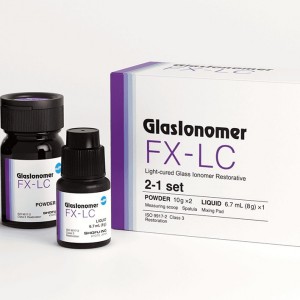
Shofu Dental’s line of dental restorative materials now includes FX-LC, a next-generation, light-cure, resin-reinforced glass ionomer formulated to deliver high strength, efficient 4
News 25 September 2026

The scholarships are part of an ongoing workforce solutions strategy to help address the need for skilled dental hygienists
News 25 September 2026

Michael Riccobene celebrates teamwork, community and more than 25 years of growth as one of sports’ most iconic trophies makes a special stop in Garner.
Editorials 25 September 2026
Oral surgery 25 September 2026
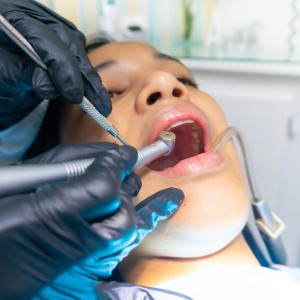
This peer-reviewed oral surgery article summarizes clinical evidence from International journal of oral and maxillofacial surgery (2026). It focuses on findings that may help dental professionals...



Copyright © 2026 - All Rights Reserved
ISSN 2767-1178