


Real Movements, face animation and digital patients for an aesthetic, functional restoration in just two appointments

The latest technologies aimed at acquiring patient data have led to impressive results, making it possible to produce aesthetic and functional restorations in a considerably reduced time.
The workflow described below is based on Zirkonzahn instruments. The creation of a mock-up shows how the digitization of the patient data with the use of innovative software functions allows the clinician to deliver aesthetic and functionalized restorations to patients in only two sessions.
First session
During the first session, the dentist acquires the patient's initial data, taking 2D photos of the face and performing intraoral scans. Subsequently, the doctor sends the data to a dental laboratory, where a patient-specific file is created in the Zirkonzahn.Archiv software. All clinical information is stored for possible further modeling and use.
Based on the photographs and intraoral scans, the dental technician creates an initial set-up of the teeth using the Smile Creator module available in the Zirkonzahn.Modellier software, thus obtaining an initial preview of the patient's potential smile.
With the Smile Creator, the dental technician can create a setup based on the patient's natural teeth or, alternatively, use the sets of dental anatomies present in the software in the Heroes Collection library.
Using the module, the dental technician can also scale the teeth, obtain a realistic color display or integrate various reference lines into the 2D photos for optimal alignment of the teeth (for example, the smile line). Once completed, the set-up is exported as a 2D or 3D file and saved in the software for any further modeling.

Second session
During the second session, the doctor and dental technician show the digital pre-visualization of the smile to the patient. If they are satisfied with the aesthetic result, the dentist continues the treatment according to the type of restoration requested.
Using the production of a mock-up as an example, the Zirkonzahn workflow is also outlined below to produce complex implant cases.
For the diagnostic phase, the workflow proposed by Zirkonzahn involves the use of the following tools:
PlaneFinder® (component of the PlaneSystem®, developed by M. DT. Udo Plaster in collaboration with Zirkonzahn), which records the patient's occlusal plane in Natural Head Position or NHP
Plane Analyzer II, which acquires the patient's mandibular movements (opening, closing, protrusion, retrusion, laterality) for an individual and precise functionalization of the prosthesis
Face Hunter, the 3D facial scanner for a photorealistic digitization of the patient's face.
These tools enable a 1:1 scale reproduction of the patient's physiognomy and oral situation in the virtual world without loss of essential information.
The doctor and the dental technician can continue the treatment without the need for further sessions for functional and aesthetic checks.
The reduction in the number of sessions is also due to the options of integrating the information acquired within the Zirkonzahn.Modifier modeling software.
Through an innovative function, Real Movement, the software allows the dental technician to visualize all the mandibular movements recorded with the Plane Analyzer II, for an accurate functionalization of the restoration already in the modeling phase.
Further automation using Face Animation also offers the possibility of associating functional movements with the patient's physiognomy to simulate different facial expressions in the software (for example, a smile). This also allows the clinician to conduct an aesthetic evaluation of the future restoration even without having the patient present.
The movements can also be imported into the virtual articulator, which is automatically set up according to the case, for a possible switch to the analog workflow with printed or milled models.
At this point the dental technician sends the doctor a PDF with all the information regarding the modeling and the functional movements generated by the software and, after receiving approval, proceeds with the creation of the requested restoration (fig. 5).

Delivery to the patient
The patient goes to the office to receive the restoration. In this case, there is no functional or aesthetic correction necessary, as all checks have been performed in advance on the digital patient using the new software functions Real Movements and Face Animation (fig. 10).
Tools and software used to create the mock-up described in the case include Detection Eye intraoral scanner, Zirkonzahn.Archiv software, Zirkonzahn.Modellier software and Smile Creator module, the PlaneSystem.
 Related articles
Editorials 20 September 2026
Dentistry33 survey shows small practices balancing growth, costs and technology modernization
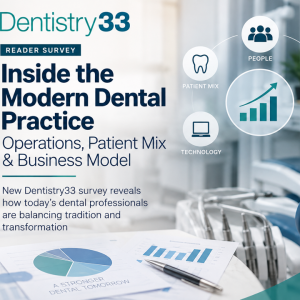
Reader survey finds solo and small practices remain prominent while staffing, rising costs and digital adoption shape business priorities
Reader survey finds solo and small practices remain prominent while staffing, rising costs and digital adoption shape business priorities

Products 26 August 2025
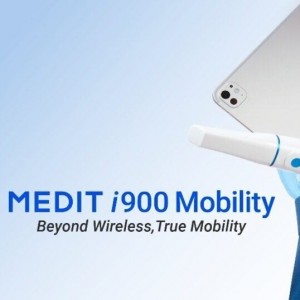
Medit, a global leader in digital dentistry, today introduces the Medit i900 Mobility, a next-generation intraoral scanner designed to deliver simplicity and true mobility to clinical workflows.
News 01 April 2025

OMNIVISION, a leading global developer of semiconductor technology—including advanced digital imaging, analog, and display solutions—and Biotech Dental, a specialist in the design and manufacture...
News 06 February 2025
Technavio Forecasts USD 915.75 Million Growth in Intraoral Scanners Market by 2028

The global intraoral scanners (IOS) market is poised for significant growth, with an estimated increase of USD 915.75 million from 2024 to 2028, reflecting a CAGR of 11.68%, according to Technavio.
Read more
Products 15 October 2026
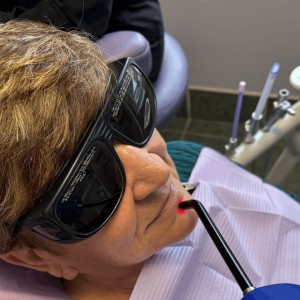
The belief in the healing power of light goes all the way back to ancient Egypt and the worship of Rah, the sun god.
Nearly half the world’s population is affected by oral disease—and the number of cases is rising.
News 15 October 2026
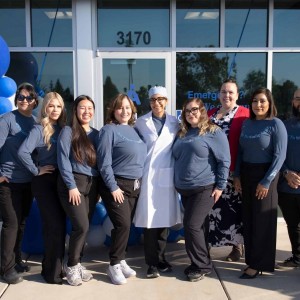
New office at 3170 R Street adds walk-in availability and same-day care options in a region where dental providers are in short supply
Each year, the University of Colorado Anschutz School of Dental Medicine (SDM) Excellence Awards recognize individuals whose dedication, leadership and innovation strengthen our mi
Oral surgery 15 October 2026
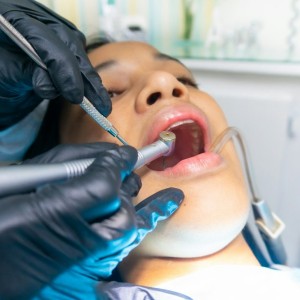
This peer-reviewed oral surgery article summarizes clinical evidence from International journal of oral and maxillofacial surgery (2026). It focuses on findings that may help dental professionals...



Copyright © 2026 - All Rights Reserved
ISSN 2767-1178