


Texas remained a top draw for dentists in 2025
This is the third story in a series about the dental industry in Texas and the nation.
University update
A record 16,761 professionally active dentists called Texas home in 2025, according to data recently released by the American Dental Association Health Policy Institute . The Lone Star State’s roster of dentists grew by more than 2,200 since 2016, more than the current total of dentists working in Alaska, Delaware, Maine and North Dakota combined.
Only California, with more than 30,000 dentists, topped Texas. In fact, California, Texas and New York dominated the top three rankings, increasingly in that order, since at least 2001. But Texas was the only one of the trio to see its number of dentists grow each year between 2001 and 2025, according to ADA Health Policy Institute’s most recent data.
“It’s encouraging news as Texas, especially in its major metro areas, is growing rapidly,” said Dr. Erica Teixeira, professor and head of comprehensive dentistry at Texas A&M College of Dentistry in Dallas. “Texas A&M is committed to educating and training future dentists and dental hygienists to serve communities across Texas, providing high-quality care to patients of all ages.”
Why it matters
The dental college graduates about 105 general dentists each year, as well as dental hygienists and graduate students who specialize in one of the 10 dental specialties offered at the College of Dentistry, said Janet Pledger, senior administrative coordinator in recruitment and admissions at A&M Dentistry. Texas law requires at least 90% of each entering dental class to be state residents, and many choose to practice in Texas after graduation.
A&M Dentistry received nearly 1,500 applicants for the Class of 2030, and the dental college consistently ranks among the most affordable for in-state residents. Applications for the Class of 2031 are nearly 1,600, Pledger said.
ADA Health Policy Institute’s figures show Texas had almost 53 dentists overall per 100,000 population last year. The national average was 60.
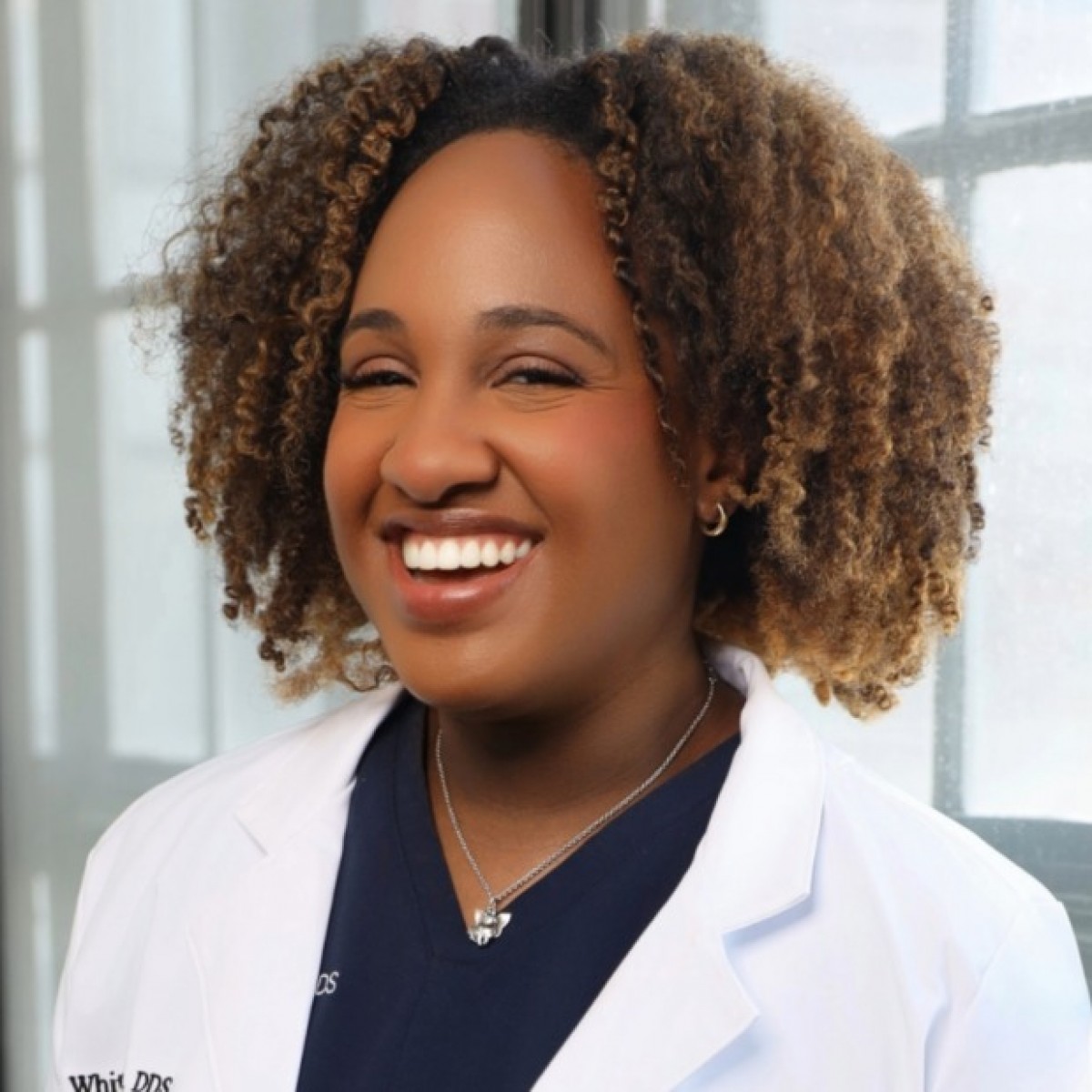
Hometown roots led Dr. Whitney Jones to practice in the Houston area after graduating from A&M Dentistry in 2016 and completing a one-year graduate program in New York. But working in the community encouraged her to open 290 Dental Studio in Waller.
Academic context
“What appeals to me about practicing in the Houston area is the diverse population,” said Jones, who grew up in Katy, a Houston suburb near Waller. “Since I’ve had the opportunity to practice in many different areas of the city prior to me opening my own practice, it was easy for me to circle back…It’s familiar to me, and I enjoy serving the community that raised me.”
Waller County was the fastest-growing county in Texas last year and the second-fastest nationwide, according to Census data. Once considered a rural enclave, Waller County’s population was nearly 70,000 in 2025, a 5.7% increase; it grew second only to Jasper County, South Carolina.
Jones and her fellow Texas dentists are projected to stay busy. U.S. Census data revealed that the state grew to more than 31.7 million people in 2025, an almost 9% increase since April 2020.
Keeping dentists in the state is only part of the equation. Dental professionals from other states flock to Texas, too.
Dr. Cameron Jolley graduated at the top of his class at Nova Southeastern University School of Dental Medicine in Fort Lauderdale, Florida, then completed an orthodontics specialty program at the University of Washington in Seattle before moving to Texas in 2008 for family reasons.
He worked as an associate orthodontist in Cedar Hill in the Dallas area before opening Jolley Orthodontics in Trophy Club in 2011. Trophy Club has nearly 14,000 residents, according to Census data . Trophy Club is in Denton and Tarrant counties in North Texas.
“That decision has proven rewarding both personally and professionally — my family and I have come to deeply appreciate the quality of life Texas offers,” said Jolley, also clinical faculty in orthodontics at A&M Dentistry. “I believe this sentiment is shared by many dentists who choose to practice in the state.”
Texas’ popularity doesn’t surprise Rich Nicely. As founder of Richardson-based Texas Practice Transitions Inc. , he’s brokered 10 deals this year, including ones with buyers from Washington state and South Carolina. Among other sales were for an associate dentist who bought his practice in Tyler in East Texas, a practice in Dallas’ affluent Highland Park neighborhood purchased and merged into the buyer’s existing practice, and an associate who bought out the owner of a practice in Edinburg, in the heart of South Texas’ Rio Grande Valley.
“Everywhere is growing,” said Nicely, who’s brokered dental deals for 36 years for A&M Dentistry/Baylor College of Dentistry alumni and other dentists. “Maybe not some of the rural areas — they’re shrinking — but the vast majority of the state is growing.”
Additional bite: There were 9,600 professionally active dentists in Texas in 2001, according to the ADA Health Policy Institute .
Buying or selling a dental practice isn’t just a real estate transaction. The deals usually include patients and employees.
“Some people start practices from scratch, and for the most part, they’re successful,” Nicely said. “But people typically buy a practice because they don’t want to go through the hassle of building out an office and then the slow growth.”
TPT works mostly with single-practitioner dentists purchasing or selling practices.
Dr. Shivam Mehta, clinical assistant professor and program director in orthodontics at A&M Dentistry, moved to Texas from Connecticut in 2021 for the academic post. He also worked at several dental offices throughout Dallas-Fort Worth before purchasing Prosper Trail Orthodontics in Prosper in August.
Prosper grew by more than 50% in five years to more than 45,000, according to Census data . Mehta also searched Frisco, McKinney and Celina, which, like Prosper, are suburbs north of Dallas.
Family desires often drive business decisions. Dr. Clara Griffey, A&M Dentistry Class of 2019, and her husband chose to raise their children in Waco.
Griffey purchased her practice from a retiring dentist in 2020. The original office, which she renamed Keep Smiling Waco in Central Texas, was a few blocks from where she grew up; she later moved the practice across the street from her childhood home.
“There’s also something really special about working in your hometown and taking care of some of the people you’ve known your whole life,” Griffey said. “It feels like everybody is at least a friend of a friend, so I never run out of ways to connect with my patients.”
Choosing a smaller community came with concessions when purchasing a practice. Finding something in her preferred general vicinity mattered more than the perfect practice opportunity.
“I wanted it to be close enough so that if I moved to a different building, it wouldn’t feel too far of a distance for the patients,” she said. “I also wanted something smaller that could grow with me instead of taking on a large loan for a large practice that I might not be able to maintain with only a year of experience.”
“I think it’s really important to establish and maintain connections with as many local dentists in the area as possible,” Griffey said. “Personally, I think the best way to do this is by getting involved in organized dentistry by attending local meetings and continuing education events.”
Waco’s population reached 147,788 in 2025, a 5.5% increase since April 2020, according to Census data .
“We’ve definitely had an increase in dentists establishing practices in Waco and Central Texas,” she said. “I would say our influx of dentists has stayed on pace with our population growth. We’ve had both new practices open and existing practices add additional dentists to their teams. I just wrapped up my third year on the leadership team for the Central Texas Dental Society, and we welcomed quite a few new members to our component from Waco, Temple and Killeen.”
The top five fastest-growing cities in the U.S. with populations of 20,000 or more were all Texas suburbs, the Census reported in May. Four are in the Dallas-Fort Worth-Arlington area, and the fifth is in the Houston area.
Celina , which includes parts of Collin and Denton counties in the Dallas area, is the fastest-growing city in the U.S. It grew nearly 25% between July 1, 2024, and July 1, 2025. The population was estimated at 64,427 in 2025 by the Census .
Fulshear, in the Houston area, was second, growing by 21% to 64,630, according to the Census .
Princeton, Melissa, Anna and Forney, all in Dallas’ outer suburbs, also made the list.
Houston ranked as the fourth-largest city in the U.S. San Antonio was seventh, Dallas was ninth and Fort Worth reached the 10 th spot for the first time. Austin was 12 th .
That’s all good news for dentists, whether stretching their entrepreneurial muscles or simply seeking to join healthy businesses. But population growth isn’t the only driver.
Garrett Franco, a fourth-year dental student, is weighing his short-term options: a one-year program in graduate advanced education general dentistry, possibly in another state, or a job in North Texas with Aspen Dental or another dental support organization.
His dream is to establish a general practice in Allen, his hometown, a northern suburb of Dallas. It had 113,447 residents in 2025, according to the Census .
“I feel like that’s really the smartest thing to do as a new doctor,” Franco said. “Go give back to the community that contributed to where you’re at today. That would be a good way to get patients and create connections in an area you are already familiar with.”
Jordan Batagower, a fourth-year student from Dallas, is applying to Texas general dentistry graduate programs and some in Florida and Illinois. No state income tax is a selling point to staying in Texas, especially when considering owning a practice someday.
“I’ve also been talking with doctors in Frisco, Farmers Branch and Carrollton (all in the Dallas suburbs),” Batagower said. “Ideally, though, I’d love the opportunity to serve a more rural community in the Denton area (also in the Dallas area).”
Early-career dentists are delaying practice ownership relative to older generations of dentists, according to an ADA Health Policy Institute study in 2025. But data found that newer generations of dentists become owners later in their careers, indicating that ownership is still a goal for many dentists.
Second-year dental student Christine Tran is open-minded about where to practice general dentistry immediately after graduation, but her long-term goal is to practice in Texas when she’s ready to start a family.
“Texas offers a great balance of career opportunities and personal quality of life,” Tran said. “Professionally, the state’s population growth will, hopefully, support long-term job stability and high patient demand across the dental field. Just as importantly, my partner (also a dental student) and I have family in Houston and Austin, and being close to them is a major priority for us as we look ahead to that next chapter.”
Dr. Margaret McMillan, clinical assistant professor in comprehensive dentistry at A&M Dentistry, advises dental students about the business side of dentistry and recommends that those undecided about their career paths work for DSOs first. They offer continuing education at no charge and give insight into monthly production.
“I also counsel the students to realize their first job, almost always, will not be where they end up practicing for life, so not to be too fussy where that first job ends up being,” she said. “When they learn their strengths and weaknesses and feel ready to build their career, then (they can) focus on location.”
The global market size for DSOs, sometimes called dental services organizations, was more than $483 billion in 2025, and it’s predicted to reach nearly $516 billion this year, according to a Precedence Research report from September. Precedence predicted that the market size could approach $919 billion in 2035.
Texas is a strong market for DSOs and is growing stronger. They are opening new offices and aligning themselves with existing practices throughout the state.
Texas attracts dentists, and it needs more. Particularly in rural areas.
“Fifty-seven of Texas’ 254 counties recorded zero dentists (in 2025),” said Dr. Liang Hong, head of public health sciences at A&M Dentistry and faculty fellow at Texas A&M Health Institute for Healthcare Access . “Another 40 recorded only one.”
That’s from data collected by the Texas Department of State Health Services ’ Health Professions Resource Center . The center’s trends, distribution and demographics fact sheet reported 15,911 actively licensed dentists in 2025, a 21.5% increase since 2015.
The greatest needs are in far West Texas, the southern border, East Texas, The Panhandle and economically disadvantaged areas of the state’s major cities, he said. That’s not expected to change much, even as the center’s 2022-2036 Oral Health Supply and Demand Projection Executive Summary found Texas could have a surplus of general dentists by 2036.
Dr. Huy Phan, A&M Dentistry Class of 2025, welcomed the opportunity to move to East Texas.
“I really enjoy the people, culture, and way of life here,” said Phan, who earned a medical degree in his native Vietnam before moving to Texas in 2015. “I did consider other states, but when I thought about where I wanted to build my future, I kept coming back to Texas. I feel comfortable here, and I still feel like there’s so much more for me to learn and experience.”
He chose Troup Family Dental in Troup — population just over 2,000, according to city statistics for 2020. It’s the town’s only dental office and includes three dentists.
“When I was looking at where I wanted to build my career, I noticed that East Texas is growing and that there are good opportunities for dentists,” he said. “Compared with some of the larger cities, I also felt that the area was less saturated, which gave me more room to grow.”
“You see the same families, hear about their lives and build relationships over time,” Phan said. “I like that part of dentistry; it makes the work feel more personal than just seeing a patient and moving on to the next one.”
Figures from the American Dental Association Health Policy Institute were accurate as of Oct. 5. However, dentist database figures from 2023 to 2025 should be interpreted with caution because changes to data maintenance methods are in progress.
Passing the drill: Baby boomer dentists bid goodbye, allowing young dentists’ smiles in the spotlight – Insights
Smile, you’re in demand: Dental hygienists find a friendly job market but limited benefits – Insights
Source: https://insights.dentistry.tamu.edu/texas-remained-a-top-draw-for-dentists-in-2025
 Related articles
Editorials 19 October 2026
Expanded coverage: Texas A&M’s Plemons named 2026 Texas Dentist of the Year
Sometimes a small act of generosity can make a tremendous impression, especially on a 7-year-old.
Editorials 12 October 2026
Expanded coverage: Texas A&M’s Plemons named 2026 Texas Dentist of the Year
Sometimes a small act of generosity can make a tremendous impression, especially on a 7-year-old.
Editorials 05 October 2026
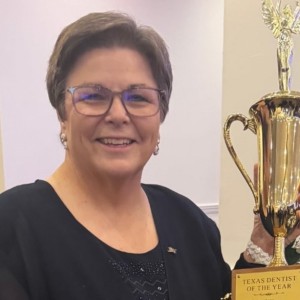
Plemons, clinical professor in periodontics and the inaugural executive director of external affairs at Texas A&M College of Dentistry, was named 2026 Texas Dentist of the Year by
Editorials 28 September 2026
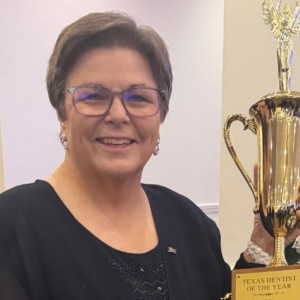
Plemons, clinical professor in periodontics and the inaugural executive director of external affairs at Texas A&M College of Dentistry, was named 2026 Texas Dentist of the Year by
Editorials 18 August 2026
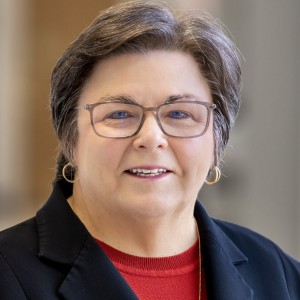
Plemons, clinical professor in periodontics and the inaugural executive director of external affairs at Texas A&M College of Dentistry, was recently selected as an at-large nominee
Read more
Products 26 October 2026
New Technology Offers Practices an Alterative Way to Approach Biological Monitoring

FDA-cleared InstaTru biological indicator for steam sterilization is designed to provide results in 20 seconds without traditional incubation.
News 26 October 2026
When It Mattered Most Highlights AAE and Endodontists’ Work to Support Patients and the Specialty During an Unprecedented Time
News 26 October 2026
Colgate-Palmolive Announces Third-Quarter 2026 Earnings Call

Colgate-Palmolive Company (NYSE: CL) will provide a live webcast of its 2026 third-quarter earnings conference call on Friday, October 30, 2026, at 8:30 AM ET.
Digital Dentistry 26 October 2026
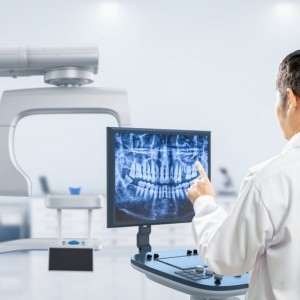
To report a fully digital and guided immediate-load All-on-4 protocol conducted in Brazil on a 59-year-old male patient with an edentulous maxilla and a history of oropharyngeal cancer surgery,...
Asia&Oceania 25 October 2026
Australian Dental Congress 2027: Event Preview and Professional Highlights

The Australian Dental Congress 2027 will take place from May 20, 2027 to May 23, 2027 in TBD, Australia, offering dental professionals a focused environment for continuing education, clinical updates...


Copyright © 2026 - All Rights Reserved
ISSN 2767-1178