


Loneliness in seniors linked to oral health problems

With the population of adults 65 and older on the rise and projected to keep climbing, researchers are finding new health problems that are affecting the aging population. While common health issues like heart disease and cancer are typically what you think of, another problem facing older adults is loneliness and its effect on overall health and well-being.
Adams School of Dentistry’s Jane Weintraub, DDS, MPH, recently collaborated on a paper published in the journal Community Dentistry and Oral Epidemiology that links poor oral health with loneliness in older adults. Findings from the 2018 Health and Retirement Study (HRS) indicate that loneliness, life satisfaction, and other psychological and social stressors may influence whether older adults visit the dentist regularly or experience edentulism, or the loss of all teeth.
Loneliness has been linked to other poor health outcomes, as well, including stroke and reduced quality of life, and increased risk of mortality. Weintraub said among older adults, life changes like retirement, reduced income, loss of dental insurance, and physical and cognitive disabilities may lead to decreased social interaction and less frequent use of dental services.
“[In our analyses,] we found that older adults who experienced loneliness and other psychosocial stressors were more likely to report fair or poor oral health, worse oral health quality of life, and had greater odds of being edentulous or not having a recent dental visit compared to their more socially connected counterparts,” Weintraub said.
This association may be due to behaviors such as people avoiding social gatherings and shared meals if they are experiencing a toothache, have missing or loose teeth or wear poorly fitting dentures that make chewing difficult. Additionally, feelings of embarrassment about the appearance of their teeth may discourage them from engaging with others socially.
Researchers reported that while loneliness could be remedied through group-based educational programs and shared activities, the emotional aspects of loneliness remain hard to address and could require a more individualized approach when it comes to patient care.
“Oral health providers should consider using validated, brief screening tools to assess loneliness and other psychosocial risk factors – especially for edentulous patients and those who do not make routine dental visits,” Weintraub said. “Caregivers can also play a role by asking socially isolated loved ones if they feel lonely, have any dental pain or need help scheduling a dental check-up.”
In addition, the researchers recommended that social workers with patients experiencing loneliness should ask about oral health during sessions and refer patients to oral health providers when appropriate.
The study included data from more than 4,700 participants aged 50 and above, using self-reported surveys to assess their psychosocial well-being, beliefs, and lifestyle. These measures included factors like loneliness, life satisfaction, perceived age, and chronic stressors. Researchers then conducted a latent class analysis (LCA) to identify distinct patterns of psychosocial stressors and resources among participants.
Three distinct groups emerged:
- “Satisfied/Connected” (47% of participants), who reported high levels of well-being and social support and were more likely to have both teeth and a recent dental visit.
- “Satisfied/Lonely” (28%), who, despite being satisfied with life, struggled with loneliness, leading to higher odds of edentulism and fewer dental visits.
- “Unsatisfied/Lonely” (25%), who exhibited the most psychosocial stressors, were the least likely to visit a dentist, and had the highest rates of complete tooth loss.
The study found that adults in the “Satisfied/Lonely” and “Unsatisfied/Lonely” groups were significantly more likely to be edentulous or miss recent dental appointments compared to those in the “Satisfied/Connected” group. Specifically, those in the “Satisfied/Lonely” class had 1.29 times greater odds of being edentulous and 1.26 times greater odds of not visiting a dentist in the past two years.
The research team also published a study using the same LCA in atheme issue on loneliness in the journal Frontiers in Public Health. This analysis leveraged dental survey data available in the 2018 HRS-dental experimental module. Loneliness was associated with worse self-rated oral health status and oral health-related quality of life.
“Oral health is connected to and an integral part of overall health and well-being. Loneliness is a potentially modifiable social determinant of health that can be intervened upon to enhance social connections” said Tracy Finlayson, PhD, professor of Public Health at San Diego State University and lead author on the papers.
The findings suggest that addressing loneliness and other psychosocial factors could improve the oral health of older adults. Health providers are urged to consider these factors in their care plans, and policymakers are encouraged to develop programs to better support the psychosocial well-being of seniors.
Source: https://dentistry.unc.edu/
 Related articles
News 07 November 2025
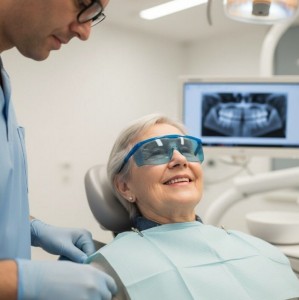
Crown Dentistry is excited to announce a pivotal enhancement in patient accessibility by now accepting Medicare as a form of payment.
News 05 November 2025
On October 15, open enrollment for Medicare began nationwide. Hundreds of thousands of seniors in New Jersey will once again face the challenge of finding the right Medicare coverage, including the...
Products 02 October 2023
Beacon Dentistry Offers Savings Plan for High-Quality, Affordable Care to Seniors

On October 15, open enrollment for Medicare will begin. Millions of seniors in Texas will once again face the challenge of finding the right Medicare coverage, including the need to decide between...
News 14 June 2023
WelbeHealth continues LA expansion, opens PACE Centers in Rosemead, North Hollywood

The new locations will increase access to care in underserved communities where thousands of lower-income older adults qualify for health care through the Program of All-Inclusive Care for the...
Market 05 June 2023

For the first time since 2009, Minnesota's most vulnerable residents, including low-income individuals, people with disabilities, and seniors, will have comprehensive dental benefits. All Medicaid...
Read more
Products 20 October 2026

News 20 October 2026

In recognition of National Dental Hygiene Month, Delta Dental highlights key findings from its 2026 State of America’s Oral Health and Wellness Report , a nationwide analysis of co
News 20 October 2026
Abra Health Group has launched The Dental Bank, a new community impact initiative designed to make essential oral health resources more accessible to individuals and families throu
Editorials 20 October 2026
Woman’s skull likely proof of ancient nose amputation, says College of Dentistry professor

Qian Wang, professor in biomedical sciences at Texas A&M College of Dentistry in Dallas, identified what he and other researchers believe is likely one of the first examples of an
Endodontics 20 October 2026

This peer-reviewed endodontics article summarizes clinical evidence from Clinical oral investigations (2026). It focuses on findings that may help dental professionals evaluate treatment decisions,...



Copyright © 2026 - All Rights Reserved
ISSN 2767-1178