


Airborne control in the Dental Clinic: air quality issues and solutions
Editorial Team
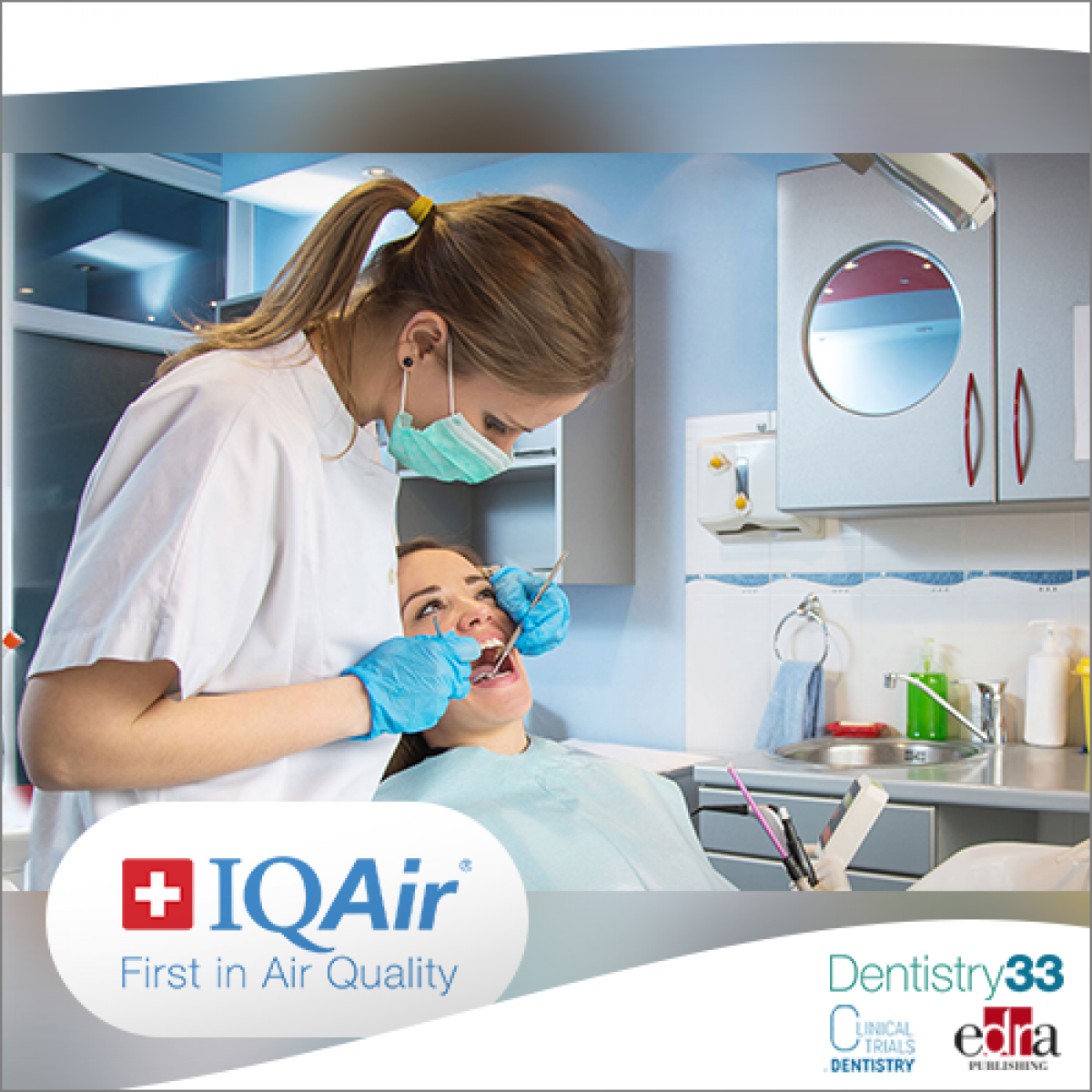
Regular dental work is key to maintaining oral health. Tooth and gum conditions can be difficult to treat, so preventive cleanings and common procedures like fillings can help stop cavities, gum disease, and tooth decay early on.
But dental practices can be subject to a variety of indoor air quality issues that can expose dentists, patients, and staff to biological contaminants and infectious pathogens. And infection risks have become even more pronounced during the COVID-19 pandemic, exposing dental workers and patients to even more critical risks beyond typical dental practice hazards.
Air quality in dental practices
Why should you be concerned about the air quality in your dental practice?
Dental practices and operatories experience specific air quality problems that can expose dentists, hygienists, and patients to infectious airborne pathogens, such as biological contaminants and viruses, as well as other unhealthy pollutants like chemicals, volatile organic compounds (VOCs), and ultrafine particles produced from high-speed instruments.
According to Dental Research Journal and the United States Department of Labor, dental work is one of the most hazardous occupations because of high risk of exposure to infections like COVID-19, toxic substances, and radiation for dentists, hygienists, and patients.
Extraoral suction system and infection control
Extraoral suction systems are an important first-line defense in ensuring that any dental aerosols carrying infected viral or bacterial matter are captured at the source – the patient’s mouth – when they result from high-speed instrumentation procedures that increase the concentration of airborne aerosols.
High-speed dental instruments, such as those used for cavity drilling and ultrasonic scaling techniques during cleanings, often generate millions of microscopic dental aerosols and tiny micro-droplets that can contain highly infectious bacterial or viral pathogens from the patient’s mouth, including COVID-19.4,5
Once airborne, these aerosols and droplets can make contact with the clothes of patients, hygienists, staff, and dentists.
These infected particles can stay on clothing for up to several days. This increases the risk that infectious pathogens are transferred from clothes into the respiratory system when, for example, a dental worker touches their face.
Airborne aerosols can also remain in the air for hours before bacterial or viral material settles on surfaces.
ABOUT IQAIR
IQAir is a Swiss-based air quality technology company empowering individuals, organizations and communities to breathe clean air through information and collaboration. Since its founding in 1963, IQAir has been a global leader and operates in more than 100 countries worldwide.
Source: https://www.iqair.com/
 Read more
Products 14 October 2026
Royal Philips (NYSE: PHG, AEX: PHIA) announced that the Philips Sonicare Next-Generation DiamondClean 9900 Prestige, its most advanced and intelligent toothbrush to date, is now av

Key transaction by Heartland Dental and its supported practices expands opportunities for supported doctors, teams, and practices while strengthening Heartland Dental’s supported f
News 14 October 2026
Henry Schein Cares Celebrates 25 Years of Corporate Citizenship

Henry Schein Cares, Henry Schein, Inc.’s global corporate citizenship program, is celebrating a quarter century of bringing together Team Schein Members, customers, supplier partne
Editorials 14 October 2026
Scholarship at the CU Anschutz School of Dental Medicine reflects the collective contributions of our faculty, staff, residents and students.
Oral Hygiene & Prevention 14 October 2026
Propolis-containing formulations in caries prevention - a systematic review and meta-analysis.
This peer-reviewed oral hygiene & prevention article summarizes clinical evidence from Clinical oral investigations (2026). It focuses on findings that may help dental professionals evaluate...



Copyright © 2026 - All Rights Reserved
ISSN 2767-1178