


Special Needs Dentistry: Dentsply Sirona supports patients with disability in dental clinics
Jörg Vogel, Vice President Sales International Special Clinic Solutions for Dentsply Sirona, discusses how the industry can do more for people with special needs.

Why is it important to educate dentists about working with patients with special needs?
According to the World Health Organization (WHO), around 15% of the world’s population is living with a disability – approx. more than 1 billion people. However, a study from Australian Dental Journal found that 41% of children with special needs from Melbourne get insufficient or no dental treatment at all. Everyone has a right to reliably good dental care and we as an industry need to do better for patients with special needs. This not only means ensuring treatment rooms are fitted with the right equipment but also training dentists how to work with people with special needs.
What has been your personal experience in this area?
I have seen firsthand how complex the care and treatment of wheelchair users and people with special needs can be in a normal dental practice. During a visit to a university dental clinic, I witnessed a mother and her autistic son being treated very patiently, respectfully, and carefully by a young dentist. This touched me, and I worked with colleagues to find out which university clinics include special needs dentistry as part of the curriculum. The result was very sobering. That was the moment for us in the International Special Clinic Solutions Team at Dentsply Sirona to take a closer look at this subject. Today, I can proudly say that we offer solutions and approaches for this special patient group and that more and more universities are now integrating this field in their teaching.
What are the current barriers?
Special needs dentistry relies on both clinics having access to appropriate equipment and students being trained how to treat people with disabilities. Yet, out of the more than 1,300 dental schools worldwide, there are only a few in Europe and in the US that provide curriculum sessions to educate students on catering to patients with special needs. Special needs dentistry has been a fringe topic for too long, it’s time we make it a priority.
How is Dentsply Sirona leading the way in special needs dentistry?
For Dentsply Sirona, as the world’s largest manufacturer of dental products and technologies for dentists and dental technicians, the topic of special needs dentistry is of key importance. Several universities throughout the world such as New York University and University of Pennsylvania have already been fitted with our products and solutions and we are proud to partner with them to help optimize care for patients with special needs. We are also working with the WHO to create broader awareness of special needs dentistry in dental universities.
What are Dentsply Sirona’s greatest achievements in this area?
We invest USD150 million in R&D each year and offer a range of specific and holistic design solutions for people with disabilities such as the single-visit dentistry with chairside scanning and milling to reduce stress and visits to the dentist, wheelchair solutions, anesthesia sedation solutions, sound-proof room concepts and mounted rail systems to move bariatric patients into the dental chair. The patented speed control in our T1 turbine has proven particularly effective in treating patients with disabilities and our turbines are very quiet – helping ease tension among patients that experience discomfort with instrument noise. The Intego treatment center has the lowest entry position in the dental market and our digital imaging solutions like Axeos allow stress-free images taken with patients sitting in the wheelchair. With special ambient lights, stress for the patients might be reduced.
How can clinics create a more friendly and welcoming environment for patients with special needs?
In general, patients with special needs cannot just arrive at the clinic, take a seat and have their treatment done. However, there are a variety of different needs and barriers to consider – both physical and cognitive. Some patients could benefit from intelligent architecture, room planning and sensory features that minimize contact and stimuli, helping alleviate their fears and tensions. Others with restricted mobility need assistance getting inside the clinic and into the chair. Integrated systems can also help, allowing for ‘single-visit dentistry’ where patients don’t need to visit the clinic several times to complete treatment. Above all, patience, empathy, and good communication skills are needed to help patients feel at ease.
How costly is it to treat patients with disabilities?
Many clinics have reservations about adapting their space for special needs dentistry as they anticipate big investments, but a lot can be achieved with quite basic modifications to existing equipment and organizational changes. This could mean using X-ray units that allow patients to stay in wheelchairs, switching to quiet instruments or ensuring there is enough space in the treatment room for a carer to be present. These small changes can make a huge difference for patients and their families, making their whole experience much less stressful.
What motivates you most to improve dentistry care for people with special needs?
Everyone deserves the best dental care, regardless of any condition or special needs. It’s a necessity, not a nice to have. Making the industry more inclusive is genuinely important to me. Knowing that we are helping take the stress out of dental treatment for patients and their families that may have previously struggled to access care is very motivating and rewarding.
How can the industry better support patients with special needs to ensure they receive the best treatment possible?
There is definitely opportunity for improved education at university level, so dentists come to the ‘real world’ prepared to work with all the different patients they might encounter. An industry-wide commitment to develop dental concepts, tools and products, as well as clinic spaces that accommodate patients with a disability, would be another great step in this direction.
If you could change one thing today in special needs dentistry, what would it be?
More action and empathy. We need to take action as early as dentists’ university years, with compulsory courses on special needs dentistry for all students. Fostering empathy for what these patients are going through is also important as it can help push the industry to find new solutions to support them.
Source: https://www.dentsplysirona.com
 Related articles
News 14 April 2026
Dentsply Sirona’s Advanced Endodontic Sealers Based on Clinically Proven Technologies

Bioceramic ProRoot Bio Sealer and AH Plus Ribbon give practitioners the confidence they need to successfully perform endodontic treatments
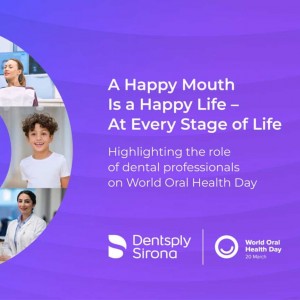
On World Oral Health Day (WOHD), Dentsply Sirona highlights the essential role dental professionals play in supporting healthier lives and reinforces that oral health is an integral part of overall...
News 26 March 2026
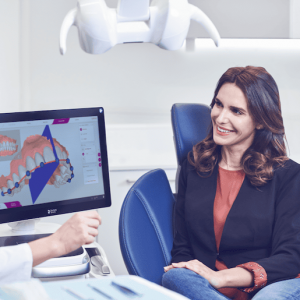
Taking place April 10-11, 2026, at the DS Academy in Charlotte, North Carolina, this immersive symposium will bring together orthodontists, clinicians, and team members to explore the evolving...
Products 24 March 2026
Dentsply Sirona’s Reciproc Minima Expands the Company’s Line of Endodontic Files
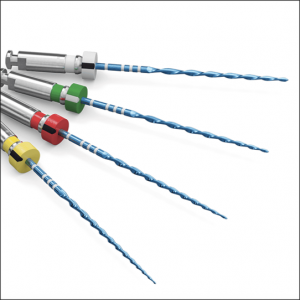
Reciproc Minima, the next generation of the Reciproc family of endodontic files from Dentsply Sirona, are engine-driven endodontic instruments made of nickel-titanium alloy used to mechanically shape...
News 17 March 2026
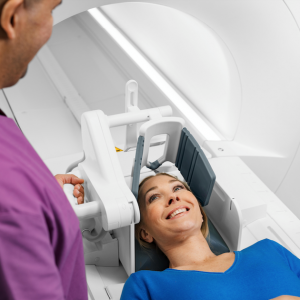
Dentsply Sirona and Siemens Healthineers are pleased to announce that the first-ever dental-dedicated MRI1 (ddMRI) system—MAGNETOM Free.Max Dental Edition—has received FDA clearance in the United...
Read more
Products 13 October 2026
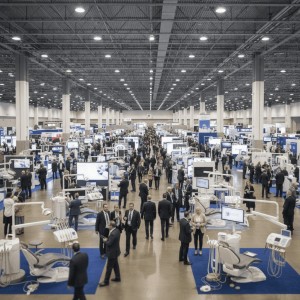

New Resources Help Dental Exhibitors Evaluate Their Investment and Explore the Personify ShowFlow™ Trade Show Success System
News 13 October 2026

New patient apps extend The Aspen Group’s mission to remove barriers to care, giving patients greater visibility, convenience, and control from booking through treatment
Editorials 13 October 2026
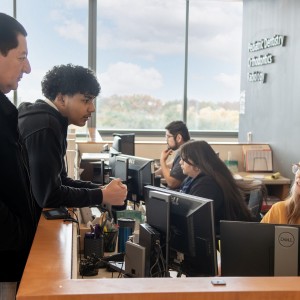
The forerunner of what’s now Texas A&M College of Dentistry opened 120 years ago in Dallas with the mission of educating dentists to provide quality care to patients in North Texas
Oral pathology 13 October 2026
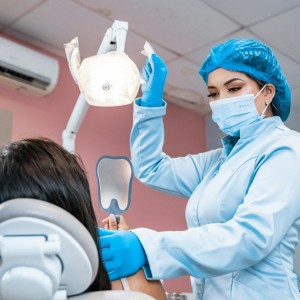
This peer-reviewed oral pathology article summarizes clinical evidence from Oral oncology (2026). It focuses on findings that may help dental professionals evaluate treatment decisions, patient...


Copyright © 2026 - All Rights Reserved
ISSN 2767-1178