


Deep Margin Relocation: flowable or traditional hybrid composite?
Co-authors: A. Comba, F. Del Bianco
Lorenzo Breschi
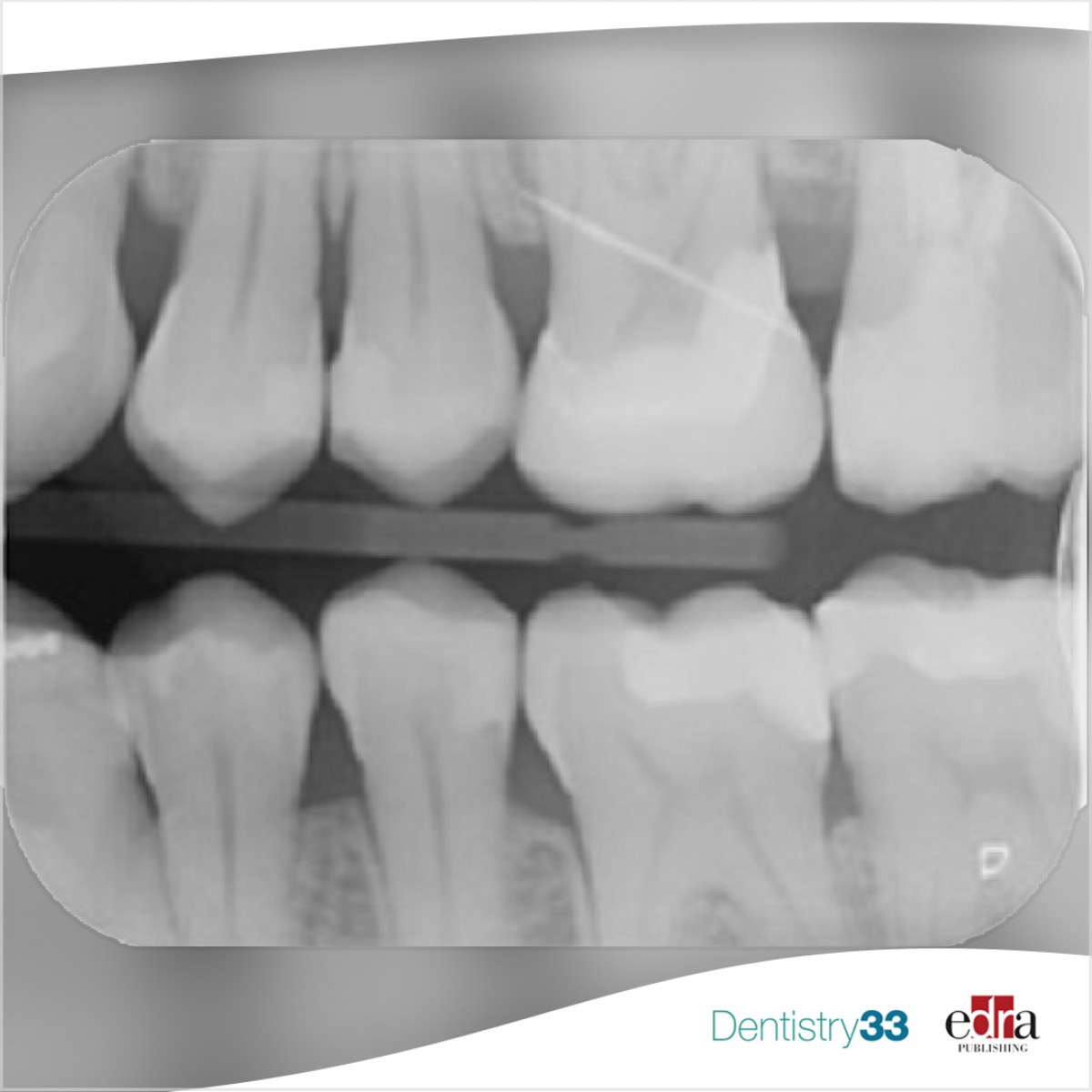
In patients requiring an indirect restoration, the proximal box is often below the surrounding gingival margin and close, or even below, the cementoenamel junction (CEJ). Deep margins may complicate impression-making and adhesive luting as optimal isolation is usually very difficult or impossible to achieve in subgingival margins. Surgical margin relocation could be a solution of this problem but is associated with attachment loss and anatomic complications because of the proximity to root concavities and the furcation area. As an alternative, the cervical margin can be elevated coronally by applying bonding and resin composite materials.
One problem related to this technique is the absence of enamel in the area: bonding to dentin is not as stable as bonding to enamel, and is associated with a reduced marginal seal and a higher risks of microleakage, bacterial penetration, hypersensitivity, and secondary caries.
Professor Ferrari, from the University of Siena, and his research group conducted an in vitro study to evaluate the influence of different materials, flowable and hybrid composites, in obtaining an acceptable marginal sealing.
Materials and Methods
To conduct the study, the authors selected thirty-nine intact, healthy, similarly sized human extracted molars and created standardized MOD cavity preparations with the remaining axial walls of 2 mm thickness and cusps reduced for full crown coverage. The prepared teeth were then divided into 3 groups according to the material employed for the reconstruction of the margin. In Group 1 the authors elevated the mesial proximal margins below the CEJ in two 1mm increments using a viscous composite (Essentia; GC Corp., Tokyo, Japan). In Group 2 they elevated the mesial proximal margins below the CEJ in two increments of 1 mm thick using a flowable composite (G-ænial Universal Flo; GC Corp.) and in Group 3 (control) they did not perform marginal elevation. Distal proximal margins were not elevated in any sample.
The group of Prof Ferrari, then, took a digital impressions of the prepared teeth and created the resin composite overlays (Cerasmart, GC) that where luted using a resin cement (G-Cem LinkForce, GC).
Results
The data obtained by the group of the University of Siena for the interfacial leakage were quantified by scoring the depth of silver nitrate penetration along the adhesive interfaces and the statistical analysis showed no significant differences in leakage scores at the dentin - cervical margin relocated (CMR) composite interface between the two materials tested (P = 0.279) however, the control group showed significantly less infiltration.
In addition, the authors underlined that in all groups, scores were significantly higher at the dentin than at the enamel interface.
Conclusions
The group of Ferrari et al. reached the conclusion that the performance of flowable and microhybrid resin composites, considering marginal sealing ability, is comparable for CMR: luting overlays directly to dentin, without CMR, appeared to be a better method for limiting marginal leakage underneath CAD/CAM overlays.
(Photocredit: Dr. Federico Del Bianco)
For additional information: Marginal sealing of relocated cervical margins of mesio-occluso-distal overlays.
 Tag
Tag
Read more
Products 20 October 2026

News 20 October 2026

In recognition of National Dental Hygiene Month, Delta Dental highlights key findings from its 2026 State of America’s Oral Health and Wellness Report , a nationwide analysis of co
News 20 October 2026

Abra Health Group has launched The Dental Bank, a new community impact initiative designed to make essential oral health resources more accessible to individuals and families throu
Editorials 20 October 2026
Woman’s skull likely proof of ancient nose amputation, says College of Dentistry professor

Qian Wang, professor in biomedical sciences at Texas A&M College of Dentistry in Dallas, identified what he and other researchers believe is likely one of the first examples of an
Endodontics 20 October 2026
This peer-reviewed endodontics article summarizes clinical evidence from Clinical oral investigations (2026). It focuses on findings that may help dental professionals evaluate treatment decisions,...



Copyright © 2026 - All Rights Reserved
ISSN 2767-1178