


Interview with Doctor Att Wael
.png)
Dr. Att is a professor and Chair of the Department of Prosthodontics at Tufts University School of Dental Medicine. He is also a professor of prosthodontics at the School of Dentistry, University of Freiburg, Germany. Dr. Att is board-certified prosthodontist from the German Society of Prosthodontics and Biomaterials (DGPro) since 2004 and an active member of multiple professional organizations, including the European Academy of Esthetic Dentistry (EAED), International Academy of Digital Dental Medicine, International College of Prosthodontists, Greater New York Academy of Prosthodontics and others. He serves as President of the International Academy for Digital Dental Medicine (IADDM), Past-President of the Prosthodontics Group of the International Association for Dental Research (IADR) as well as President of the Arabian Academy of Esthetic Dentistry (ARAED).
Dr. Att obtained his DDS degree in 1997 form Tishreen University and received the Dr Med Dent (2003) and PhD (2010) degrees as well as the title of extraordinary professor (2013) from the University of Freiburg. He was a visiting assistant professor from 2005 to 2007 at the Weintraub Center for Reconstructive Biotechnology, UCLA School of Dentistry and the Director of Postgraduate Program in Prosthodontics in Freiburg from 2007 to 2017. A widely published and internationally respected clinician and lecturer, Dr. Att’s main focus within teaching, research and clinical practice is esthetic and implant dentistry as well as well as the implementation of cutting-edge digital technologies in both reconstructive and multidisciplinary dentistry.
1) Let's start with an actual topic: Is it more difficult today to be a Prosthodontics at the time of Covid? What advice can you give to your colleagues?
I think it isn't only challenging for prosthodontists but for every dentist. If we reflect back to when the pandemic started, there were stories about patients who didn't want to come back to the clinic. The number of patients didn't change; what has changed is their willingness to move and travel for a visit; they are scared and worried, and we need better education and communication to overcome these reasonable fears. Many dentists are trying to see how they can reorganize their time & their work. There is an increase in precaution, more time for appointments, team education, and new protocol and standard to follow. We see now that young dentists are working under one umbrella to help each other and help the patient. More dentists' aggregation under the same clinic facilitates the patients and allows them to cover different needs in a single location. We have to keep going the hard work and resist these harsh times, and we will see and expect a recovery by the end of 2021 beginning of 2022.
2) Compared to a few years ago, today, technology in dentistry is fundamental. What are the clinician and his/her team's role in the management of these new technologies?
The knowledge in terms of the technology, starting back in 2010, has been an explosion of the introduction of new technologies. These are divided into 3 different categories where we can start with data acquisition devices, followed by data manipulation and planning devices, and last but not least is manufacturing. The three components of a digital workflow have been introduced to dentists, and they have all of these amounts of technologies available. However, at the same time, the ones who have been doing something for the last 15-20 years and are very comfortable with it would not be easy to convince about the advantages of implementing new technology. It even makes it more complicated if they would spread that knowledge or have their team members be engaged and enjoy the technology.
A simple example is an intraoral scanner: it has been there for, I would say, more than 25 years at least, but if we look at the penetration rate among dentists all over the world today is way less than 10%. Therefore there are some roadblocks; there are some obstacles. Going back to the clinician and the team's question, the clinician has to be first ready to go out of the comfort zone and start exploring new avenues that might reflect on a better clinical workflow and a greater service for the patients. It could also expedite the full service for the patients; once that dentist went out of the comfort zone, they would start to explore any possibility of spreading the information and the knowledge to the team members and then adapting it daily. I know dentists that they bought, going back to the previous example, an intraoral scanner, and after one month, they just figured out it's too complicated for them; they would just put it on the side.
In contrast, I know another dentist that shut down his office for six months and focused on training himself and his team members on mastering the intraoral scan and in-house manufacturing, and now he's one of the best in the world to do this. Basically, making that decision to go out of the comfort zone is the first step you need to do, dedicate time for it in terms of the finances. They would say that the technology is very expensive, but there are other modalities nowadays, and it started in Europe and nowhere in the US where you can lease the equipment to always stay up to date with the latest technologies and also software, and you don't have to pay that much every month or all at one-time. You can lease even an iPhone, and then every year get a new one if you want to; the same thing is happening now that companies realize it's very expensive for dentists to invest every two or three years since technology is updating all the time and they thought about a different modality that could be a win-win situation.
3) Technique versus technology, which is the relationship today. Is it always the clinician's knowledge that determines the success of rehabilitation?
This is very easy to answer: I can give you a Ferrari or a Lamborghini, but if you don't know how to drive, you're going to crash the car. This is precisely what also happens in dentistry. Basic education, especially at universities, is a critical factor in shaping future dentists. In other words, if this student has been exposed to compromise in terms of delivering the quality, not looking into details, just do it, go ahead and deliver it, finish it as soon as possible, these things would go with him all his life. On the other side, if that student has learned from the beginning how to take care of details regardless of the technology be working meticulously and thinking, putting the quality on top, then it would take it with him/her all the way with no compromises. The same thing happens when the students go to postgraduate programs for specialty, where they need to learn how to take care of quality and learn the basics, the most important thing is to learn how to treatment plan and then learn how to execute what they are doing. I think the clinician is number one in terms of his knowledge, clinical skills, and quality of work, his collaboration network, and, of course, what he is implementing in terms not only of the materials but also the technology that is being recommended for delivering the work and service for the patient.
4) What would be the next revolutions brought by technology in Dentistry?
What's happening now is that dentistry is related somehow to digital dentistry, digital technologies, or the digital workflow; it’s merely automation and artificial intelligence. This is already happening now, and this is entailing and connect on all different aspects of the digital workflow. Starts by acquiring the data again and then manipulating the data and processing; in other words, for example, we can take a CBCT, and then software that uses algorithms will be able to analyze this 3D image and give us information about the anatomical structures automatically: it gives you information about possible lesions, and an imitation of for example the T which is going to help the clinician to recognize regions that might not be visible, or maybe because they're too busy to just focus enough and identify that. Therefore, the software would immediately show the issues and say there's something here, it might be this kind of lesion, and the dentist would look to it. The AI algorithm will help recognize the lesions that, of course, work on the patients' benefit. There is software now available that it's also based on artificial intelligence that runs an analysis of the radiograph and would tell the dentist whether the decay is and propose a treatment plan that can be whether a filling crown or an inlay or on lay based on that analysis. The AI would collect hundreds of thousands of images, compare, develop these algorithms and then implement them in the software. We published a paper last year about AI's role in Dentistry, and I think it's coming speedily. We have here in Boston at least three companies that specialize in AI in Dentistry, and we'll see more of this in the future. In treatment planning, you have AI engines that take the patient's photos and design the patient's smile automatically, which is impressive. It [AI engines] shortens the time needed for the treatment, and it helps the clinician recognize things that they might miss or look at in the first sight and again for the execution, automatic manufacturing, this would be very disruptive. Short example about it, there's a production center which uses robotics for automation of the manufacturing procedures of crowns and that one machine can produce in an automatic manner 5,000 crowns a month, but there's only one lab technician that is controlling the whole thing as quality control at the end of the production line. This is because of the algorithms that have been introduced and the automation procedures; this is what is coming now.
5) How do you see Virtual Reality impacting dentistry as a new technology, and do you think it can have some relevant aspects for you?
Yes, if we look at the medical medicine for surgeries, VR and AR (the augmented reality) are being used; both are being utilized but to a lesser extent for demonstration purposes in anatomy classes. We have them available here for the virtual reality assistive anatomy class, but you don't see them in terms of clinical implementation. Basically, what is going to happen is we are going to have the goggles or the equipment for virtual reality on the screen between the patient and the dentist, and you would see the anatomical landmarks or things being annotated on that screen to help the dentist recognize. All of this is available but still experimental; it hasn't been implemented yet. What is happening now is that much focus is being given on AI and automation related to robotics.
6) Finally, a personal question. Your CV is impressive: among your professional goals achieved, which ones do you remember most proudly?
If you're able to influence someone's life and see that person succeed because of you, I think this is the most rewarding thing. I've been fortunate to be working with so many intelligent and hardworking people, whether they were postgraduate residents or faculty at the school or people who are coming to training; and then they come and tell you that when they trained or were in the training programs, they learned a lot from my teaching, it had changed my life. This is the most rewarding thing. I mean looking at papers, books, and patients, all of this is nice, but when you see that someone is going to say "thank you for changing me", that would be great even for patients as well, and this is the ultimate thing that I think I'm proud of.
 Read more
Products 13 October 2026
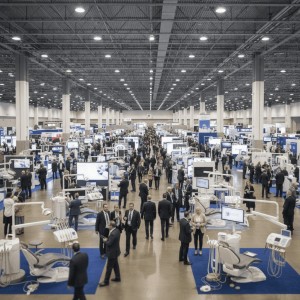

New Resources Help Dental Exhibitors Evaluate Their Investment and Explore the Personify ShowFlow™ Trade Show Success System
News 13 October 2026

New patient apps extend The Aspen Group’s mission to remove barriers to care, giving patients greater visibility, convenience, and control from booking through treatment
Editorials 13 October 2026
The forerunner of what’s now Texas A&M College of Dentistry opened 120 years ago in Dallas with the mission of educating dentists to provide quality care to patients in North Texas
Oral pathology 13 October 2026
This peer-reviewed oral pathology article summarizes clinical evidence from Oral oncology (2026). It focuses on findings that may help dental professionals evaluate treatment decisions, patient...



Copyright © 2026 - All Rights Reserved
ISSN 2767-1178