


CHAMFER VS FEATHER EDGE FOR A SINGLE ZIRCONIA CROWNS
Co-authors: A. Comba, F. Del Bianco
Lorenzo Breschi
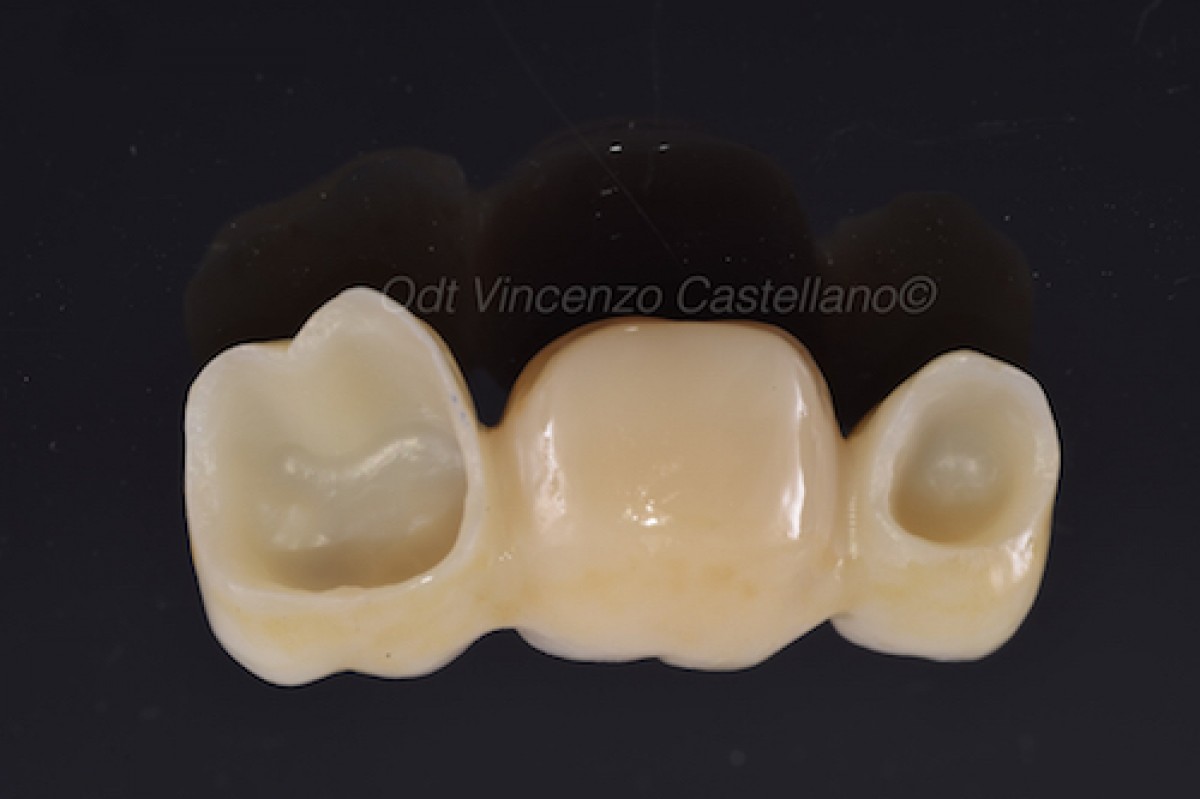
The margin of prosthetic restorations is a key factor for clinical success. In terms of periodontal health, the scientific literature has shown a preference towards supragingival preparations.
To prepare a tooth for a crown, two types of finish line are possible: a vertical finishing line without a defined margin (best known as feather edge), or a horizontal sharp line with a clear finishing line (knows aschamfer). However, in literature there is not clear evidence on which is the best preparation.
In addition, in some specific cases, for example when the abutment is discolored or the prosthetic restoration is in an aesthetic area, it is not indicated to prepare the tooth with supragingival chamfer.
Cagidiaco et al. conducted a research study to evaluate the influence of two different finishing lines on periodontal health and fracture resistance of zirconia single crownslayered with dedicated ceramics. The authors specifically focused on the influence that the distance between the margins and the bone crest had on the periodontal health, independently from the preparation performed (vertical or horizontal).
MATERIALS & METHODS
The authors selected fifty patients (28 females and 22 males) with a mean age of 45.7 years (standard deviation: 10.2 years) who each needed one posterior layered zirconia single crown on a premolar and/or a molar region.
The abutments were randomly distributed into two groups:
Group 1: feather-edge preparation and
Group 2:chamfer preparation.
After preparation and cementation of the crowns, patients were recalled at 1 month, 6 months, and 1, 2, 3, and 4 years of follow-up to evaluate function, esthetics, and marginal adaptation of the prosthetic rehabilitations.
Bleeding on probing (BoP) and distance of margins from the bone crest were recorded. Statistical analyses were performed for survival and success rates and significance was set for p<0.05.
RESULTS
Group 1 showed 80% success rate and a 96% survival rate; among crowns one encountered irreparable fracture of ceramic layer; Group 2 showed 76% success rate and a 100% survival rate.
Four chippings were recorded in Group 1 and five in Group 2.
No statistically significant differences were found between the two groups as concern this parameter. On the other hand, BoP was found in 72% of the cases in Group 1 and in 48% of the patient in Group 2, thus underlying a statistically significant correlation between BoP and the distance of the margin from the bone crest.
CONCLUSIONS
The results obtained from the in vivo study by Cagidiaco et al. concluded that there is no difference in the choice of the finishing line in terms of success and survival rate for a single zirconia crown. However, a correlation between Bop and the distance between the prosthetic margin and the bone crest has been demonstrated.
For additional information: Randomized Clinical Trial on Single Zirconia Crowns with Feather-Edge vs Chamfer Finish Lines: Four-Year Results.
 Related articles
Prosthodontics 27 November 2022

A close marginal gap and accurate fit between the tooth and the restoration are important for the long-term success of fixed dental protheses.

In ceramic full coverage indirect restoration marginal and internal adaptations have been shown to be a key factor for clinical success. Indeed, poor adaptation of restorations can result in cement...
Read more
Products 08 October 2026
Cementation remains one of the most nuanced and decisive phases in restorative dentistry, where small deviations can significantly influence long-term success.
News 08 October 2026

The Minnesota Dental Association (MDA) installed its 2026-2027 officers and trustees during the Association’s Leadership Conference on September 18 in Shoreview, marking the beginn
News 08 October 2026

Report finds dental practices struggling to hire even as professionals show broad interest in flexible work opportunities
Editorials 08 October 2026

It is with great sadness that Texas A&M College of Dentistry announces the passing of former staff member, Kenneth Howell, who died Wednesday, Sept.
Periodontology 08 October 2026
This peer-reviewed periodontology article summarizes clinical evidence from BMC oral health (2026). It focuses on findings that may help dental professionals evaluate treatment decisions, patient...



Copyright © 2026 - All Rights Reserved
ISSN 2767-1178