


The access cavity in retreatments: redefinition and management of iatrogenic errors
By Alessandro Fava
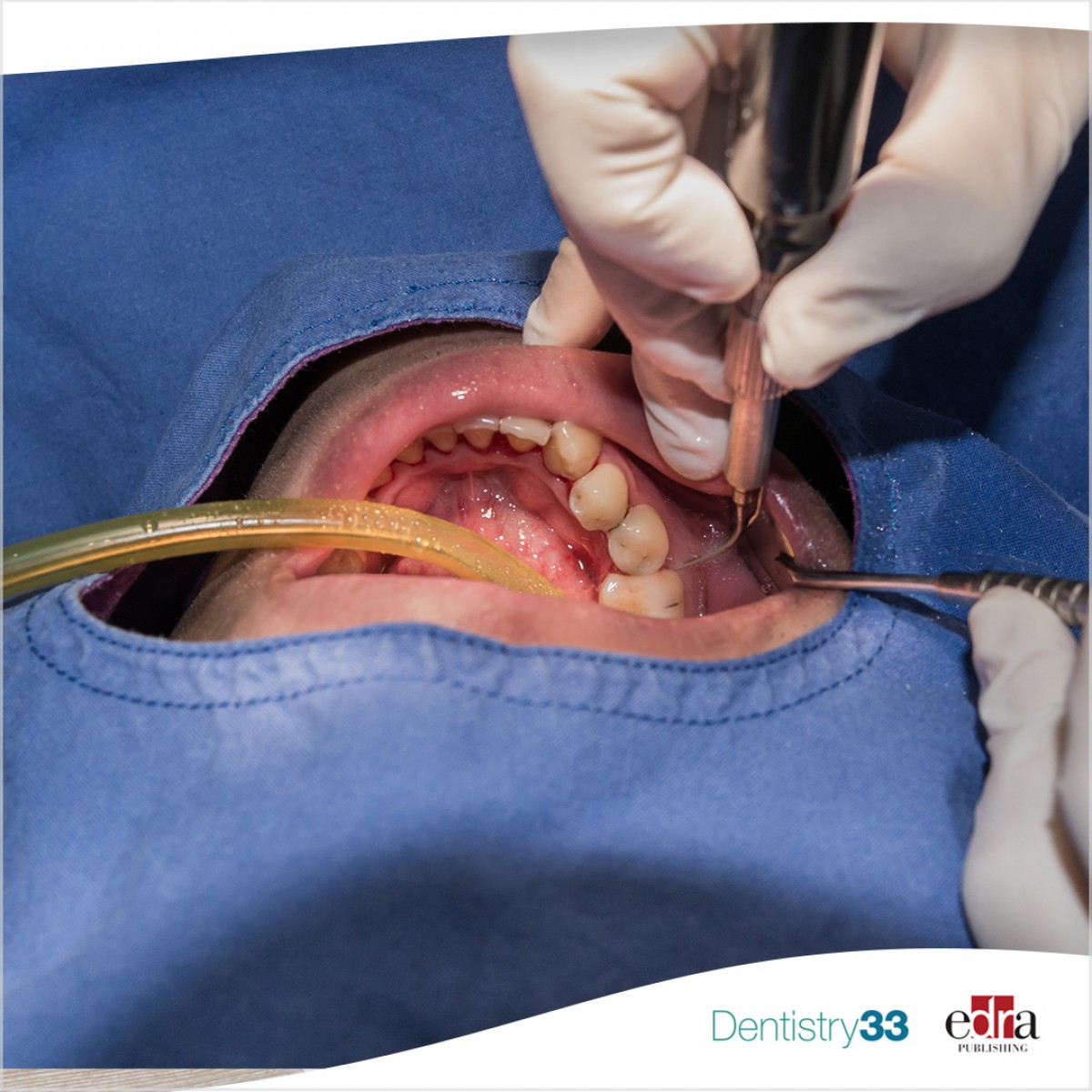
Endodontic retreatments often represent a fundamental crossroads for the fate of the single dental element. Even more so, when dealing with a multidisciplinary treatment plan, endodontic success can condition the prosthetic and aesthetic choices.
Materials and methods
The analysis of the coronal seal is one of the first evaluations to be carried out on a tooth to be subjected to endodontic retreatment: if there are doubts about the integrity of the coronal seal, the advice is to remove the restoration in correspondence with the element. to be retracted and expected to be redone.
The seal must be effective before, during and after root canal treatment: a good coronal seal helps to increase the overall result. To ensure a seal, periodontal surgery is sometimes necessary for the correct restoration of biological width and, consequently, to be able to isolate the operating field by means of a rubber dam.
The removal of fillings, crowns or bridges also allows you to perform a scrupulous biomechanical analysis and to draw up a restorative prognosis of the element in question. The use in this phase of atraumatic techniques for the underlying dental tissue is essential.
One of the most important steps, like a primary endodontic treatment, is the redefinition of a correct access cavity: in this way the subsequent phases of probing and canal shaping will be easier.
The removal of endocanal retentions (post and stump, prefabricated, fiber) is still today considered a difficult step and at risk of causing root fractures. The knowledge of the techniques and the use of suitable devices allow instead to be able to overcome this obstacle in safety.
Only after having removed any intra-canal retentions in the most conservative way possible can the access cavity be approached, paying close attention to intercepting over-preparation or under-preparation errors so as to avoid further iatrogenic damage or weakening of the residual dental structure.
Excessive preparation errors are much more frequent: they often complicate the search for any non-instrumented canals by deleting the usual reference points used in identifying the canal anatomy. Sometimes they result in real iatrogenic damage: perforations of the pulp chamber, serious damage to the residual dental structure, capable of putting the prognosis of the element at risk.
Results and Discussion
The restoration of a correct access cavity allows to accurately explore the floor of the pulp chamber so as to be able to search for any untreated canals or canal isthmuses which represent one of the most frequent causes associated with the presence of periapical lesions of endodontic origin.
Thanks to the introduction of mineral trioxide aggregate and its most recent derivatives, perforations can be repaired with good predictability of the clinical outcome.
Conclusions
The possibilities of recovering an element seriously compromised from an endodontic point of view pass through the possibility of regaining the most linear access possible to the entire root canal system: the use of specific devices, adequate enlargement and the introduction of materials. bio ceramics associated with the experience accumulated in the field allow to raise the prognosis.
Clinical significance
Success in endodontic retreatments is conditioned by any anatomical alterations caused by previous operators. It is therefore necessary that an approach is used that allows restoring the ideal conditions to then face the probing, mechanical shaping, cleansing and obturation procedures.
This article was originally published in "Dental Cadmos."
 Related articles

Several milestone papers have been written in the last years on Endodontic Retreatments and some of the most important among them have been authored by Prof....
Products 01 April 2026

Innovative integrated diode laser protocol achieves >99.99% bacterial reduction while simplifying endodontic workflow and reducing treatment time.
News 27 November 2025

A new study published in the Journal of Endodontics shows that patients experience meaningful improvements in comfort, chewing function, and overall quality of life after receiving root canal...
Endodontist Brandon Barnett was set to focus his health law project at Yale School of Public Health on access to care through Medicaid.
Endodontics 18 August 2025
Factors influencing the long-term results of endodontic treatment: a review of the literature

The purpose of this review of the literature is to examine the factors and their influence on the outcome of endodontic treatments, and also to attempt to have an authors’ consensus concerning the...
Read more
Products 14 October 2026
Royal Philips (NYSE: PHG, AEX: PHIA) announced that the Philips Sonicare Next-Generation DiamondClean 9900 Prestige, its most advanced and intelligent toothbrush to date, is now av

Key transaction by Heartland Dental and its supported practices expands opportunities for supported doctors, teams, and practices while strengthening Heartland Dental’s supported f
News 14 October 2026
Henry Schein Cares Celebrates 25 Years of Corporate Citizenship

Henry Schein Cares, Henry Schein, Inc.’s global corporate citizenship program, is celebrating a quarter century of bringing together Team Schein Members, customers, supplier partne
Editorials 14 October 2026
Scholarship at the CU Anschutz School of Dental Medicine reflects the collective contributions of our faculty, staff, residents and students.
Oral Hygiene & Prevention 14 October 2026
Propolis-containing formulations in caries prevention - a systematic review and meta-analysis.
This peer-reviewed oral hygiene & prevention article summarizes clinical evidence from Clinical oral investigations (2026). It focuses on findings that may help dental professionals evaluate...


Copyright © 2026 - All Rights Reserved
ISSN 2767-1178