


Recent findings for better understanding fatigue and wear resistance of dental composites: What’s new on fatigue and wear resistance of dental composites?
Lorenzo Breschi

Teeth are subjected to cyclic stresses that repeat more than 300.000 times per year for the average person. When dental composites restorations are performed, they are constantly subjected to a hostile ambient where forces coming from mastication, bruxism or clenching and the presence of saliva and acidic attacks may undermine the longevity of the reconstructions.
In this contest, it is fundamental to have a deep knowledge of how and why the restorative materials react to cyclic stress and fatigue, in order to make the correct clinical choice for the patient.
Fatigue and wear processes are closely related with subsurface cracks propagation and are considered driving key in the wear mechanisms of composites. Furthermore, mechanical cyclic loading can intensify roughness of the restorations, increasing the ability of bacteria to colonize the surface of the material and potentially create a favorable environment for secondary caries, which is the most common reason for the replacement of composite restorations. Moreover, water hydration is well known to influence the mechanical properties of dental composites by affecting the matrix, filler, or matrix-filler interfaces.
Some potential effects of water that may accelerate fatigue cracks growth include:
- Plasticization and softening of the resin matrix
- Hydrolytic degradation of the silane coupling agent promoting interfacial debonding
A recent article published on the Journal of the Mechanical Behavior of Biomedical Materials by Kruzic et al. underlined the importance of considering the microstructure of the composites when analyzing the wear behavior of dental restorative materials.
Increased resistance to wear of resin-based polymers is generally related to:
- Volume of the filler particles;
- Diameter of the filler particles;
- Degree and the depth of polymer matrix conversion rate;
- Quality of the bonding interface.
The antagonist also plays an important role in how a composite restoration behaves under fatigue. Indeed, significantly higher wear was demonstrated to occur when the antagonist contains hard large fillers (e.g.,~3.5 m zirconia) compared to the resin-based reconstruction performed with a nano-sized and/or softer fillers material. Furthermore, also immediate tooth-brushing after exposure to an alkaline solution proved to be responsible of the increase in wear in a range between 60 – 1400% (Sarkar, 2000).
Recent findings in the field are in accordance to suggest that the oral environment of the patient substantially influences the amount of the material loss and the surface quality and indicates that hybrid and micro-hybrid composites suffered greater surface damage (increase in roughness/wear), while nano-composites have better resistance to the chemical and mechanical assault.
 Tag
Tag
Related articles
Editorials 22 April 2024

If there were an indicator for change in music, this would be off the charts if it wanted to measure how many and what changes Miles Davis has made since, at eighteen, he was enlisted, almost by...
Editorials 10 October 2023

Research is an endless quest. That’s why it has always fascinated Georgios Kotsakis. The moment he figures out an answer, he feels a new question he needs to creatively tackle pops up.
Editorials 31 December 2021

Dear readers,The approach of New Year is usually a festive period and, for some of us, an occasion to look back and sum up our impressions of the year that we are about to leave behind. We can...
Editorials 08 October 2021
Dear Dentistry33 readers,After a long period without the possibility of meeting collogues and friend in person, I am finally pleased to present you the 22nd Annual Congress organized by the Italian...
Editorials 04 August 2021

It has been approximately one and a half year since the Covid-19 pandemic changed the course of the world and influenced the lifestyle of many people, regardless of their background and profession....
Read more
USA 20 September 2026 - 30 November -0001

The American Academy of Implant Dentistry Annual Conference 2026 will take place from November 11, 2026 to November 14, 2026 in TBD, USA, offering dental professionals a focused environment for...
Editorials 20 September 2026
Dentistry33 survey shows small practices balancing growth, costs and technology modernization
Reader survey finds solo and small practices remain prominent while staffing, rising costs and digital adoption shape business priorities
Reader survey finds solo and small practices remain prominent while staffing, rising costs and digital adoption shape business priorities
Edra Professional Books 19 September 2026
Piezoelectric surgery of impacted teeth: A Practical Reference for Dental Professionals
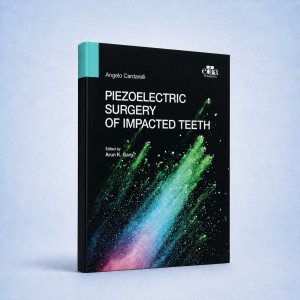
Piezoelectric surgery of impacted teeth is an Edra professional dentistry reference focused on clinical practice, education and treatment planning.
Products 18 September 2026
Hard Tissue Charting and Natural Voice Perio Added to Overjet Voice

Providers talk through exams naturally while Overjet Voice handles hard tissue findings, perio measurements, and clinical notes directly in the PMS.
News 18 September 2026

Partnership leverages BioHorizons’ commercial network to broaden availability of Xtant’s allogeneic growth factor technology, OsteoFactor Pro™, which BioHorizons will private brand



Copyright © 2026 - All Rights Reserved
ISSN 2767-1178