


Can the hypomineralization of enamel in deciduous cause the appearance even in permanent?
Lara Figini

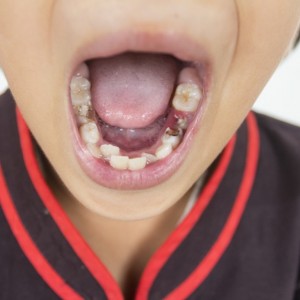
The hypomineralization of the molar-incisal enamel (MIH) is defined as a defective development of the dental enamel which affects at least a first permanent molar, but can also affect the anterior teeth. It is characterized by the opacity of the dental enamel that goes from white to a brownish color and which can progress in a disintegration of the post-eruptive enamel; in the most severe cases, it also presents dental exposure. Histologically, opacity in MIH cases is due to an inferior mineral density and porosity increases from white to brown. Clinically this porosity determines a greater risk of fracture of the dental element in question; furthermore, the porous enamel represents a barrier to the optimal bonding of the adhesive materials.
Hypersensitivity is the most frequently reported symptomatology of patients with MIH. Literature studies suggest that the appearance of MIH may be anticipated by the presence of hypomineralization already in deciduous dentition.
MATERIALS AND METHODS
In a study published in Pediatric Dentistry, the prevalence and correlation between the hypomineralization of primary second molars (HSPM) and primary canines (HPC) with molar-incisive hypomineralization (MIH) in the permanent dentition is evaluated in 1963 brazilian school-age children. The Academy of Pediatric Dentistry (EAPD) criteria were used to evaluate the scores of HSPM/HPC and MIH. Only children with four first permanent molars and eight incisors were considered in the calculation of the prevalence of MIH (n = 858); for the prevalence of HSPM/HPC, only children with four primary second molars (n = 1590) and four primary canines (n = 1442) were considered. To assess the relationship between MIH/HSPM, only children with both criteria were considered.
RESULTS
The prevalence of MIH was found to be 14.69% (126 out of 858 children). For HSPM and HPC, the prevalence was 6.48% (103 of 1592) and 2.22% (32 of 1442), respectively. A significant relationship was observed between MIH and HSPM/HPC (P <0.001). The probability ratio for MIH based on HSPM was found to be 6.31 and for HPC 6.02.
CONCLUSIONS
Hypomineralization of deciduous second molars and deciduous canines is associated with the appearance of hypomineralization of permanent molars, since children with HSPM/HPC are six times more sensitive to develop MIH.
CLINICAL IMPLICATIONS
Early detection of HSPM and HPC in decidual dentition is important for the clinician to identify the patients most at risk for developing MIH in the permanent. Unfortunately, the etiology of MIH is not yet fully understood nor is there any treatment available that can effectively prevent post-eruptive fracture. Parents should be advised of the correlated risk between hypomineralization in the deciduous and that in the permanent. Furthermore, the early detection of hypomineralization in primary teeth may allow the adoption of preventive measures.
For additional informations:
Are hypomineralized primary molars and canines associated with Molar-Incisor Hypomineralization?
 Related articles
Pediatric dentistry 09 October 2026
This peer-reviewed pediatric dentistry article summarizes clinical evidence from BMC oral health (2026). It focuses on findings that may help dental professionals evaluate treatment decisions,...
Pediatric dentistry 29 April 2026
Exploration and innovative application of digital technology in pediatric dentistry
Pediatric dentistry treats patients aged 0-18 years, encompassing the characteristics of general dentistry.
Pediatric dentistry 14 April 2026
Comparison between dexmedetomidine and esketamine in pediatric dentistry surgery
Dexmedetomidine (D) and esketamine (K) are used for the sedation of pediatric dental surgery. This study was designed to compare the effect of intranasal D and K in producing moderate sedation for...
Existing studies on adverse events (AEs) in pediatric dentistry have been limited in scope.
Read more
Products 13 October 2026

New Resources Help Dental Exhibitors Evaluate Their Investment and Explore the Personify ShowFlow™ Trade Show Success System
News 13 October 2026

New patient apps extend The Aspen Group’s mission to remove barriers to care, giving patients greater visibility, convenience, and control from booking through treatment
Editorials 13 October 2026

The forerunner of what’s now Texas A&M College of Dentistry opened 120 years ago in Dallas with the mission of educating dentists to provide quality care to patients in North Texas
Oral pathology 13 October 2026
This peer-reviewed oral pathology article summarizes clinical evidence from Oral oncology (2026). It focuses on findings that may help dental professionals evaluate treatment decisions, patient...



Copyright © 2026 - All Rights Reserved
ISSN 2767-1178