


Removable appliances for the treatment of skeletal Class II malocclusions
Massimo Gagliani

INTRODUCTION
In the treatment of Class II malocclusions a huge number of variables are involved and not only the class improvement but also the airways modifications are frequently sought.
Are the removable appliances able to convert a negative growth of the naso-pharyngeal district?
In a very interesting systematic review, published on the Journal of Orthodontic Science, was promoted to assess the effect of functional appliances on the airway dimensions in patients with skeletal Class II malocclusion.
MATERIALS AND METHODS
Articles were identified through a literature survey carried out through the following databases: PUBMED, Google Scholar, The Cochrane Library, Embase, Lilac and Web of Scholars. 17 studies were analyzed.
RESULTS
Qualitative assessment was done for all the 17 studies. The effect of functional appliances in the dimensions of three airway spaces (nasopharynx, oropharynx, and hypopharynx) were analyzed. Facial esthetics plays a pivotal role in the perception of beauty and is also the key reason for patients with skeletal Class II malocclusion to seek orthodontic treatment. This malocclusion is frequently caused by a mandibular deficiency. It can be attributed to a small or retruded mandible relative to the maxilla. Growth modifications are attempted to alter a developing skeletal Class II relationship in young children, predominantly during the growth phase by modifying the patients’ remaining facial growth to a favorable size or position of the jaws using functional appliances.
Functional appliances such as: Activator, Bionator, Twin Block, Frankel II, FMA, MPA IV, and Herbst enhance the proprioceptive sensory feedback mechanisms of various perioral musculatures that control the function and position of the mandible and transmit the generated forces to the dentition and basal bone.
CONCLUSIONS
Significant increase in the dimensions of nasopharynx and oropharynx was observed with Activator.
Significant increase in the nasopharynx and hypopharynx (male patients) was observed with Bionator, but in the oropharynx was observed an insignificant increase.
Significant increase in the oropharynx and hypopharynx was observed with Twin Block, but in the nasopharynx was observed an insignificant increase.
Significant increase was observed only in the hypopharynx for Frankel II.
Decreased or insignificant change was observed with FMA, MPA IV, and Herbst appliances.
For additional information:
Effect of functional appliances on the airway dimensions in patients with skeletal class II malocclusion: A systematic review
 Related articles
Orthodontics 21 August 2026

This peer-reviewed orthodontics article summarizes clinical evidence from Dental press journal of orthodontics (2026). It focuses on findings that may help dental professionals evaluate treatment...
Products 07 August 2026

Partnership with Eversmile makes o scillating s ystem available through HSO in the United States.
Orthodontics 07 August 2026

This peer-reviewed orthodontics article summarizes clinical evidence from Dental press journal of orthodontics (2026). It focuses on findings that may help dental professionals evaluate treatment...

Partnership with Eversmile makes o scillating s ystem available through HSO in the United States.
Orthodontics 25 June 2026

This peer-reviewed orthodontics article summarizes clinical evidence from PloS one (2026). It focuses on findings that may help dental professionals evaluate treatment decisions, patient outcomes, or...
Read more
Products 13 October 2026
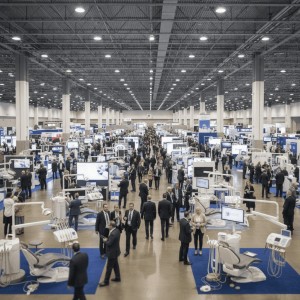

New Resources Help Dental Exhibitors Evaluate Their Investment and Explore the Personify ShowFlow™ Trade Show Success System
News 13 October 2026

New patient apps extend The Aspen Group’s mission to remove barriers to care, giving patients greater visibility, convenience, and control from booking through treatment
Editorials 13 October 2026

The forerunner of what’s now Texas A&M College of Dentistry opened 120 years ago in Dallas with the mission of educating dentists to provide quality care to patients in North Texas
Oral pathology 13 October 2026
This peer-reviewed oral pathology article summarizes clinical evidence from Oral oncology (2026). It focuses on findings that may help dental professionals evaluate treatment decisions, patient...



Copyright © 2026 - All Rights Reserved
ISSN 2767-1178