


Back to clinical activity: how to improve the air and the work environment.
Author: M. Montevecchi

Phase 2 is approaching. Yes, finally the collective commitment of these days seems to dare on the results and the possibility of a progressive return to the operativity of the past.
But will it really be so? Will it be possible for us dentists, hygienists, dental assistants and dental technicians to work as a few days ago?
Perhaps never before has the whole dental team been called upon to collectively question the future of the profession and the critical issues of each specific task.In these days of suspension, we have learned to manage urgencies and emergencies by following all the precautions indicated for the case, with a renewed awareness of the infectious risk linked to our profession.
Renewed because we have known for some time how our profession implies dealing with potentially pathogenic microorganisms, present in blood and oral secretions, transmissible by dental procedures.
It is probably from the 1980s, with the spread of HIV infection, that we learned to make our "universal precautions" useful for preventing the transmission of pathogens. And as it was at that time, in this case too we are faced with an infectious pathology with borders that are not yet fully defined and that leave strong uncertainties. With high probability, in the more or less near future we will be able to trust in new knowledge, in the development of effective vaccines and / or pharmacological therapies. From that day everything will probably return to the normality of the past. But for now, the immediate future unfortunately still has many unknowns.
On our back to work there will be no reassuring "zero point" from which to start again, as after a destructive storm. This enemy will still be there with all its elusive and impalpable presence. We will therefore have to continue riding the wave of doubt, without knowing exactly when the risk of contagion will end.Probably it will not be possible for all patients to carry out the now usual telephone triage. At the same time, it will not even be possible to avoid treatment to patients with clinical signs that are overall non-specific, but in any case, associated with Covid-19. We will therefore inevitably have to learn to manage all patients as possible asymptomatic or paucisymptomatic carriers. We will have to know how to deal with this new invisible enemy whose presence is not in our eyes identifiable in the patient. Regardless of the considerations related to the difficult changes in clinical operations, as well as the complex management of PPE that will result from it, I would like to focus attention on the quality of the air and the interesting possibilities that are offered to us.
More and more studies are highlighting the ability of the SARS-CoV-2 coronavirus to circulate and persist in the air. Until now it was believed that the main method of transmission was through the so-called "droplet", the droplets expelled from the mouth when coughing, sneezing and talking.
From the new evidence, which will however be confirmed by further and more detailed studies, the virus could be transmitted through the aerosol, which remains in the air much longer than the microscopic droplets.
Upon return, our primary objective will therefore be to reduce extraoral nebulization, constantly using double suction, giving up or limiting as much as possible the instruments with high nebulizing capacity, using the rubber dam as much as possible and repeatedly ventilating the working environment. With the bitter awareness, however, that in all likelihood these useful rules will still not be sufficient. The air quality of our working environments will therefore be more than poor at the end of the working day.
So here we have to ask ourselves today about "new" possibilities. Units for the purification of air and environments based on ozone release (O3) have already existed for some years. This natural gas, consisting of three oxygen atoms, is characterized by a very high oxidizing capacity. At our atmospheric pressure it is extremely unstable and once it has reacted with a substrate, it turns into pure oxygen. Production is also a very simple process since an electric charge in the presence of oxygen is enough to give rise to O3.
The oxidative strength, the release of pure oxygen and the low production cost make this substance extremely interesting. Clear evidence has shown its excellent bactericidal ability. Equally, viruses are unable to resist its oxidative damage and coronaviruses among them (we are still waiting for specific tests on SARS-COV-2).
Another very interesting aspect is the total absence of forms of resistance. It follows that any microorganism dispersed in an environment, if reachable by O3 for the due time and effective concentration, is inexorably destroyed.
Another interesting aspect is the greater resistance of eukaryotic cells (our cells) to oxidative damage. This aspect has made it possible to identify thresholds within which our body is able to live without being damaged. It is on the basis of these principles that specific units have been developed for air purification and sanitizing environments. There are low and high concentration dispensers. The former, given the absence of danger to the respiratory tract, could be used in our studies during operational activity, so as to contain microbial contamination. The latter, given the high toxicity, could instead be used for a profound sanitation of the environment during the hours of suspension of the operating activity.This form of sanitization, in particular, is very interesting. If in fact the air tends spontaneously to improve after a few hours due to natural precipitation phenomena, we know from recent studies that on some surfaces such as steel and plastic, materials highly represented in our studies, the permanence of the virus deposited there goes well beyond the 24 hours.
As it is not technically possible to think that we can sanitize all the study surfaces with the ordinary procedures, the use of an active gas that can spread to all environments constitutes a formidable prospect. With the awareness that specific studies on SARS-Cov-2, particularly focused on the dental environment, would be highly useful in this historical moment, it can however be considered that on the basis of current knowledge, the application of these units in our studies constitutes a relevant aid in countering the spread of this pathology.
BIBLIOGRAPHY:
- Aerosol and Surface Stability of SARS-CoV-2 as Compared with SARS-CoV-1. van Doremalen N, Bushmaker T, Morris DH, Holbrook MG, Gamble A, Williamson BN, Tamin A, Harcourt JL, Thornburg NJ, Gerber SI, Lloyd-Smith JO, de Wit E, Munster VJ. N Engl J Med. 2020 Mar 17. doi: 10.1056/NEJMc2004973.
- Turbulent Gas Clouds and Respiratory Pathogen Emissions: Potential Implications for Reducing Transmission of COVID-19. Bourouiba L. JAMA. 2020 Mar 26. doi: 10.1001/jama.2020.4756.
- Virucidal effect of ozone treatment of laboratory animal viruses. Sato H1, Wananabe Y, Miyata H. Jikken Dobutsu. 1990 Apr;39(2):223-9.
- Ozone generated by air purifier in low concentrations: friend or foe? Cestonaro LV, Marcolan AM, Rossato-Grando LG, Anzolin AP, Goethel G, Vilani A, Garcia SC, Bertol CD. Environ Sci Pollut Res Int. 2017 Oct;24(28):22673-22678. .
 Related articles
Oral Hygiene & Prevention 04 March 2022
Hygienist study reports low COVID-19 infection rate, high vaccination rate, slow return to work

ADA, ADHA share findings from research conducted September 2020-August 2021
Fewer than half of dental hygienists who left employment early in the pandemic returned to the workforce in 2021, according to a study from the American Dental Association and American Dental...
Oral Hygiene & Prevention 20 September 2021

In a study published in Lancet Infectious Diseases, researchers from Yale School of Medicine looked at Covid-19 "breakthrough" infections in fully vaccinated people."In the United States, the...
Read more
Restorative dentistry 17 April 2026
Patient Perceptions of New Robotic Technologies in Clinical Restorative Dentistry
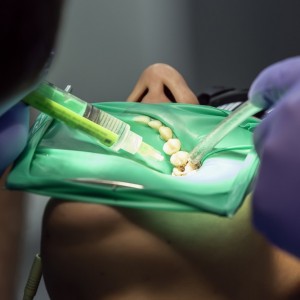
Patient perception research has failed to focus on burgeoning technology within the dental field.
Editorials 17 April 2026
Some admissions experiences can make an applicant feel like a statistic being analyzed or, as first-year Florida dental student Nate Fordham put it, like a “mushroom”: kept in the dark and fed...
Products 17 April 2026
BioHorizons’ Tapered Pro Conical Named to 16th Annual Readers’ Choice Top 25 Implant Products
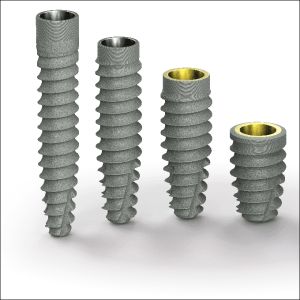
Streamline your workflow with BioHorizons. Tapered Pro Conical offers a single, color-coded prosthetic platform for all full-arch cases.
News 17 April 2026
Following AI Voice Perio, voice-driven charting expands to restorative exams, enabling single-provider clinical documentation in Denticon.
Cosmetic & Reconstructive Dentistry recently announced the creation of a new scholarship program supporting graduating seniors from Fairfield’s public high schools who plan to pursue studies in...


Copyright © 2026 - All Rights Reserved
ISSN 2767-1178