


Materials for digital dentistry: classification and clinical features
Lorenzo Breschi

CAD/CAM technology has been used in industry for long time and has increased in popularity over the past years in dentistry from making impressions, casts, provisional and final restorations. The digital process is usually time efficient and eliminates the need for impression materials, and in most cases, allows the delivery of the final product in a single appointment.
Today, the dental market proposes several CAD/CAM systems and, for that reason, it is crucially important for the restorative team to understand the spectrum of digital materials that are available in order to ensure the optimal treatment outcome for the patients.
A recent review from Prof. Sulaiman published on the Journal of Esthetic and Restorative Dentistry at the beginning of the current year and entitled “Materials in digital dentistry-A review” described in details the materials utilizing CAD/CAM technologies, their properties and accuracy compared to conventional methods and materials used in restorative dentistry.
The author divided the materials into subtractive (SM) and materials produced by additive manufacturing (AM).
Talking about SM, Sulaiman explained that, usually, they involve milling of the designed volumetric shape from a presintered or sintered material using a milling machine that performs either in a wet or dry condition, that moves in defined paths and is referred to as 3‐, 4‐, 5‐axes milling systems. These systems could be either laboratory or chairside. The subtractive materials described in the paper include wax, poly(methyl methacrylate) (PMMA), composite resins, high‐performance polymers, metals, and ceramics. As regard the second category, the one produced by additive manufacturing, it employs 3D printing, a recent and emerging technology that has gained a lot of interest in the dental field due to its wide‐range capabilities for providing surgical guides, temporary restorations, occlusal splints, bite‐guards, scaffolds, and orthodontic appliances.
Indeed, AM allow the production of pieces by adding materials (composites, metals, and ceramics) layer‐by‐layer, based on a computerized 3D model.
The review concluded that CAD/CAM technology has changed the way dentistry is practiced, and care is delivered. In particular, laboratory and chairside milling units are described as more versatile and capable of milling multiple materials with properties that may ensure a long-term clinical success. On the other hand, additive manufacturing is a good alternative and a promising manufacturing method of dental restorations and appliances. To be more precise, the additive techniques allows for fabrication of more sophisticated build structures without excessive force and much less non-recyclable waste when compared to SM techniques
However, beside these positive aspects, AM have a shorter track record of clinical evidence compared to SM materials.
For additional informations: Materials in digital dentistry-A review.
 Related articles
Digital Dentistry 03 April 2026
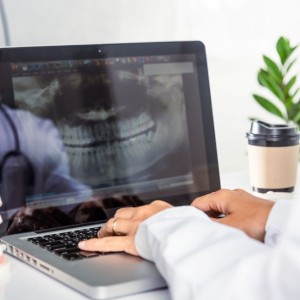
The purpose of this review is to provide the readers with current information and state-of-the-art of digital scanning systems within the orthodontics.
Digital Dentistry 16 February 2026
An original procedure for the ovoid pontic technique in ortho-restorative cases

In the multidisciplinary treatments, especially in case of missing teeth in aesthetic area, the compliance of patient during retention time post orthodontic therapy is evidently very high, even among...
Editorials 03 February 2026

Dr. Alireza Sadr of the Department of Restorative Dentistry has been appointed as the first-ever UW School of Dentistry Director of Digital Dentistry and Innovation, effective Jan. 1, 2026.
Digital Dentistry 30 January 2026
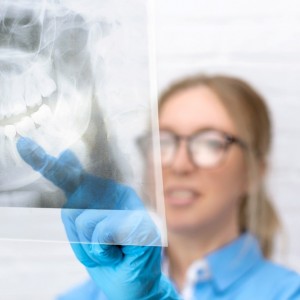
Digital dentistry may be defined in a broad scope as any dental technology or device that incorporates digital or computer-controlled components in contrast to that of mechanical or electrical alone.
Editorials 13 January 2026
Pitt’s New Digital Dentistry Labs to Provide State-of-the-Art Education and Patient Care
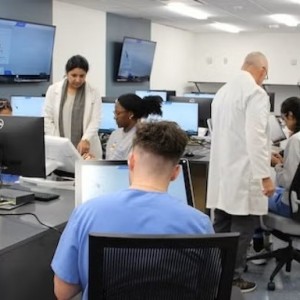
Three new dentistry labs at the University of Pittsburgh School of Dental Medicine will give students and residents hands-on experience with cutting edge digital dental technology while providing...
Read more
Restorative dentistry 17 April 2026
Patient Perceptions of New Robotic Technologies in Clinical Restorative Dentistry
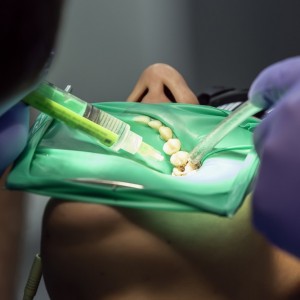
Patient perception research has failed to focus on burgeoning technology within the dental field.
Editorials 17 April 2026
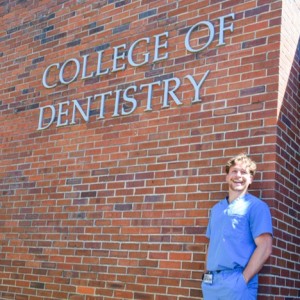
Some admissions experiences can make an applicant feel like a statistic being analyzed or, as first-year Florida dental student Nate Fordham put it, like a “mushroom”: kept in the dark and fed...
Products 17 April 2026
BioHorizons’ Tapered Pro Conical Named to 16th Annual Readers’ Choice Top 25 Implant Products
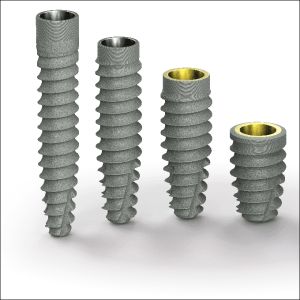
Streamline your workflow with BioHorizons. Tapered Pro Conical offers a single, color-coded prosthetic platform for all full-arch cases.
News 17 April 2026
Following AI Voice Perio, voice-driven charting expands to restorative exams, enabling single-provider clinical documentation in Denticon.
Cosmetic & Reconstructive Dentistry recently announced the creation of a new scholarship program supporting graduating seniors from Fairfield’s public high schools who plan to pursue studies in...



Copyright © 2026 - All Rights Reserved
ISSN 2767-1178