


CAD-CAM VS hot-press lithium disilicate crowns: which guarantees a better marginal fit?
Simona Chirico

Increasing demand for esthetic dental restorations has led to the popularity of ceramic restoration systems. Among these the most used is lithium disilicate, which can be produced either in the laboratory with a hot-press technique, or with CAD/CAM system.
The quality of lithium disilicate crowns produced by the CAD/CAM system has always been discussed. From what emerges in literature, there are no differences between the two methods from the structural point of view and the mechanical characteristics. But for clinical success and longevity?
In the study published in The Journal of Prosthetic Dentistry in 2019, Dolev et al. took this aspect into consideration, evaluating the marginal fit by calculating the marginal discrepancy (MD) (the perpendicular measurement from the cervical margin of the casting to the preparation margin) and the absolute marginal discrepancy (AMD) (angular combination of the MD and the extension error - overextension or underextension-) of lithium disilicate crowns produced by the hot-press and CAD-CAM techniques. Acceptable MD values are included between 50 e 120 mm.
MATERIALS AND METHODS
Thirty typodont teeth were divided into 2 groups. Fifteen teeth were scanned with the CEREC Omnicam intraoral scanner, and crowns were fabricated with the CEREC MC XL chairside CAD-CAM milling unit from IPS e.max CAD blocks. Fifteen typodont teeth were sent to a dental laboratory, and lithium disilicate crowns were fabricated from IPS e.max press ingots using the hot-press technique. The 30 crowns were cemented with a self-adhesive cement (RelyX Unicem) and then sectioned with a precision saw. The MD and AMD were measured for each crown with a light microscope.
RESULTS
Mean MD and AMD values were evaluated by analyzing 8 specific points of the crowns: disto-buccal (DB), disto-lingual (DL), mesio-buccal (MB), mesio-lingual (ML), mid-buccal location ( Mid-B), mid-lingual location (Mid-L), mid-mesial localtion (Mid-M), mid-distal location (Mid-L).
As expected, the MD values were lower than the AMD values because the AMD is an angular combination of the MD and the extension error. The mean AMD values were lower for the crowns fabricated using the CAD-CAM technique, except at the Mid-L/ML and Mid-D/DL locations.
The CAD-CAM technique produced an overall mean ±standard error (SE) AMD width of 115 ±4 mm, whereas the hot-press technique produced an overall mean ±SE AMD width of 130 ±5 mm.
The overall mean ±SE MD values were similar: 87 ±3 mm for the crowns fabricated by CAD-CAM and 90 ±4 mm for the crowns fabricated by the hot-press technique.
CONCLUSIONS
Even if the study concludes that there isn’t a statistically significant differences in MD and AMD between the CAD-CAM and hot-press fabrication methods, we can see how the best results are recorded by the lithium disilicate produced with CAD/CAM method.
For additional informations:
Comparison of marginal fit between CAD-CAM and hot-press lithium disilicate crowns
 Related articles
Editorials 27 September 2026
Dentistry33 survey highlights replacement care, deep caries and evolving restorative workflows
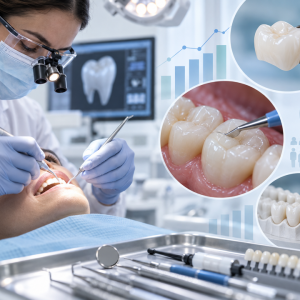
Reader survey finds direct composites remain dominant, secondary caries is the leading reason for restoration replacement, and clinicians want more training in pulp preservation
Reader survey finds direct composites remain dominant, secondary caries is the leading reason for restoration replacement, and clinicians want more training in pulp preservation
Editorials 20 September 2026
Dentistry33 survey shows small practices balancing growth, costs and technology modernization
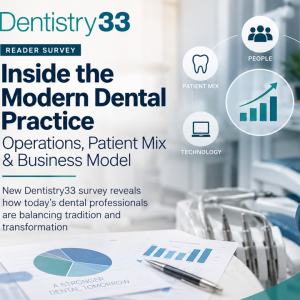
Reader survey finds solo and small practices remain prominent while staffing, rising costs and digital adoption shape business priorities
Reader survey finds solo and small practices remain prominent while staffing, rising costs and digital adoption shape business priorities
Digital Dentistry 03 April 2026
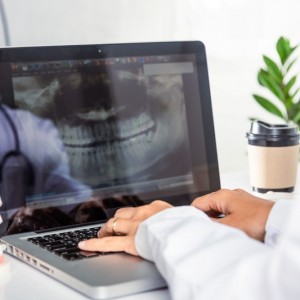
The purpose of this review is to provide the readers with current information and state-of-the-art of digital scanning systems within the orthodontics.
Digital Dentistry 16 February 2026
An original procedure for the ovoid pontic technique in ortho-restorative cases

In the multidisciplinary treatments, especially in case of missing teeth in aesthetic area, the compliance of patient during retention time post orthodontic therapy is evidently very high, even among...
Editorials 03 February 2026

Dr. Alireza Sadr of the Department of Restorative Dentistry has been appointed as the first-ever UW School of Dentistry Director of Digital Dentistry and Innovation, effective Jan. 1, 2026.
Read more
Continuous innovation across the DEXIS ecosystem helps clinicians work with greater clarity, confidence, and efficiency
News 23 October 2026
CrownPoint Partners announced the successful closing of a $9.2 million, five-property dental sale-leaseback portfolio located throughout Michigan.
News 23 October 2026
Dentsply Sirona, Midwest Dental Expand Technology Relationship
Beginning November 1, Dentsply Sirona will expand its long-standing relationship with Midwest Dental Equipment & Supply beyond consumables to include its complete technology portfo
Editorials 23 October 2026
Honoring Excellence: Graduation Awards for CU Anschutz Dental Students and Faculty

As the University of Colorado Anschutz School of Dental Medicine celebrates the graduating DDS Class of 2025, we are proud to recognize the students and faculty members whose excep
Implantology 23 October 2026
This peer-reviewed implantology article summarizes clinical evidence from Clinical oral implants research (2026). It focuses on findings that may help dental professionals evaluate treatment...


Copyright © 2026 - All Rights Reserved
ISSN 2767-1178